
This article has been written as part of the project 2023-1-PL01-KA220-VET-000159821 Professionals and their skills in hydrogen sector co-funded by the European Union in partnership with ‘’Zielona Chemia’’ Cluster from Poland. It has been published on Epale – https://epale.ec.europa.eu/en/blog/professional-competence-irish-hydrogen-sector
EPALE is a multilingual open membership community for teachers, trainers, researchers, academics, policy makers and anyone else with a professional role in adult learning across Europe. EPALE is funded by the European Commission, as the latest development in an ongoing commitment to improving the quality of adult learning provision in Europe. Community is at the heart of EPALE. It is set up around the sharing of content related to adult learning, including news, blog posts, resources, and events and courses.
Authors:
Ph.D. DSc. Eng. Bożena Gajdzik, assoc. prof., Silesian University of Technology, Gliwice, Poland, Expert at EDU SMART TC LIMITED Ireland
Ph.D Researcher Aleksandra Marcinkowska EDU SMART TC LIMITED Ireland
Ph.D Aleksandra Ścibich Kopiec Foundation of Education, Development and Innovation ”FERI” Poland
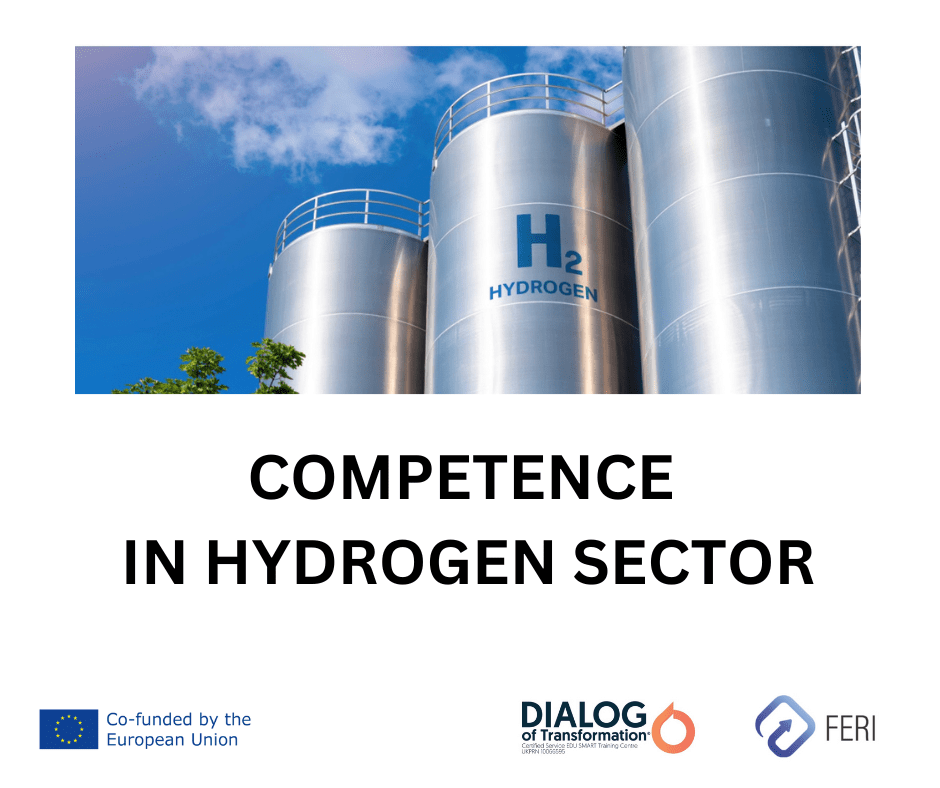
Professional Competence and Map of Competence in the Hydrogen Sector in Ireland.The EU has established a robust framework to support the hydrogen sector, which directly influences the competencies required.
Key documents and initiatives include The European Green Deal which aim is to make Europe climate-neutral by 2050, emphasizing the role of hydrogen in decarbonizing industry and transportation, EU Hydrogen Strategy (2020) which outlines plans to boost hydrogen production and utilization, aiming for 40 GW of electrolyzer capacity by 2030, Fit for 55 Package which proposes revisions to existing EU legislation to reduce net greenhouse gas emissions by at least 55% by 2030, encouraging the adoption of clean hydrogen and the Clean Hydrogen Alliance – a partnership platform to mobilize resources and coordinate actions to accelerate the development and deployment of clean hydrogen technologies.
Based on those frameworks, Ireland has been implementing new regulations and strategies and the hydrogen sector in Ireland l is rapidly emerging as a key player in the global shift towards sustainable energy solutions. Ireland, with its ambitious climate goals and commitment to renewable energy, is positioning itself as a leader in the hydrogen economy.
To ensure the successful development and deployment of hydrogen technologies, professional competence and a well-defined map of competence are crucial. Hydrogen Characteristics is the complex knowledge professionals working in the hydrogen must have:
– Hydrogen is the lightest gaseous chemical element, 14.5 times lighter than air.
– It is the third most abundant element on Earth.
– It almost never exists as a single molecule due to its high reactivity, immediately forming compounds.- It is ubiquitous, existing in forms such as water, natural gas, or methanol.
– It does not pollute the environment in any way.- It is emission-free, non-toxic, and odourless.
– It is a very high-energy fuel (33 kWh/kg).
– It competes with battery technologies.- Batteries achieve an energy density of 250-260 Wh/kg.
– Hydrogen has nearly 126 times greater energy density per kilogram.
– A disadvantage is the low volumetric energy density of hydrogen (3 kWh/m³ at 20°C and 1 bar).
– A 156L tank holds only 6.3 kg of hydrogen (Hyundai Nexo).
– It serves as an energy carrier (storage).
– 1 kg of hydrogen H35 (at 350 bar pressure) is approximately 45 liters.
Electrolysis with Renewable Energy Sources
Conducting the electrolysis reaction allows for the production of hydrogen with very high purity exceeding 99.9%.
The method involves splitting a water molecule (H₂O) into its two fundamental components, hydrogen and oxygen, by supplying electrical energy.
The cost of producing one kilogram of hydrogen through electrolysis is composed of over 70% of the price of electricity required for the entire process, and electrolysis is an energy-intensive method.
Hydrogen Production
There are three types of electrolyzers utilizing:
– Alkaline electrolysis
– PEM electrolysis (Proton Exchange Membrane)
– High-temperature electrolysis occurring in fuel cells with solid oxidizers.
The most popular method of hydrogen production is the electrolysis of water (approximately 9 liters of water and about 50 kWh of electricity are needed to produce 1 kg of hydrogen). Currently, 96% of the hydrogen produced comes from fossil fuels, with only 4% being generated through water electrolysis.
Defining Professional Competence in the Hydrogen Sector
Professional competence in the hydrogen sector involves a combination of specialized knowledge, technical skills, and practical experience necessary to work effectively in various roles within the industry. These competencies are outlined as part of our project and are essential for the safe and efficient production, storage, distribution, and utilization of hydrogen.
Staff possesses a thorough understanding of hydrogen production methods such as electrolysis and steam methane reforming, as well as the properties of hydrogen as an energy carrier. This encompasses technical aspects of transmission, distribution, and storage. Knowledge of the properties of hydrogen and the criteria for selecting electrolyzers based on energy sources is also essential.
Currently recognized types of hydrogen are categorized by colors: grey hydrogen is produced from methane (methane reforming), blue hydrogen uses the same process but captures CO2, black hydrogen is derived from hard coal (gasification), brown hydrogen from lignite (gasification), turquoise hydrogen comes from methane pyrolysis, while pink, purple, and red hydrogen are produced using nuclear energy (electrolysis). Yellow hydrogen is generated from solar energy, green hydrogen from renewable energy sources (RES), and white hydrogen from geological natural sources.
Main areas of competence include:
– Renewable Energy Source (RES) Knowledge: In the context of the European Green Deal, green hydrogen plays a crucial role as a decarbonization agent in industries that are challenging to electrify, such as heavy industry, long-distance transport, and aviation. Competence in utilizing hydrogen technologies in RES projects is vital for the energy transition of businesses and local authorities.
– Market Knowledge: Familiarity with the electrolyzer market, including the scale of electrolyzers and process data during production, as well as storage aspects: types of solid hydrogen storage tanks, tank manufacturers, suppliers of materials for hydrogen tank construction, etc.
– Environmental Awareness: This is an important area that should be included or linked to RES projects, highlighting the significance of ecological consciousness in the context of hydrogen technologies.
– Economic Knowledge: Staff understands the cost structure of hydrogen production, noting that the cost of producing one kilogram of hydrogen through electrolysis comprises over 70% of the price of the electricity required for the entire process, indicating that electrolysis is an energy-intensive method.
– Safety and Regulations: This area emphasizes familiarity with safety protocols, standards, and regulatory frameworks that govern the hydrogen sector. There are several levels of knowledge regarding the safety of hydrogen technologies. The lowest level is a foundational understanding of safety and regulations, followed by an advanced level where operational staff work, and the highest level encompasses specialized technological and technical expertise.
– Project Management: This is a critical competence. Proficiency in planning, executing, and managing hydrogen-related projects, including infrastructure development and system integration, is increasingly essential in today’s environment.
– Project Team: The use of Scrum, a scaled Agile methodology, facilitates the collaboration of multiple teams working together to deliver complex solutions during hydrogen production.
– Problem Solving: The ability to address and resolve issues that arise within individual projects is vital.
– Open Innovation Awareness: This refers to an open and collaborative approach to the hydrogen production process.
The open innovation model seeks to acquire necessary knowledge and innovations through a built network of contacts, including specialized research institutions, suppliers, users, clients, and even competitors. Open innovation and green hydrogen are interconnected concepts that can mutually reinforce one another. Open innovation involves collaboration with external partners, sharing knowledge, and leveraging external resources to drive innovation. In the context of green hydrogen, open innovation can play a crucial role in bringing together diverse perspectives and expertise to tackle complex environmental and technological challenges.
– Research and Development (R&D): Expertise in innovating and enhancing hydrogen technologies through ongoing research and development efforts.
– Knowledge of the technological processes in industries where green hydrogen will be utilized (Hydrogen is used in various sectors, such as: refining, chemical, steel, food, ceramics and glass, cement, as well as in heavy-duty transportation, rail, marine, and aviation), in district heating, and in energy production. In this segment, knowledge of low-emission and zero-emission technologies is essential, along with specialized technological and technical expertise.
Map of Competence
A map of competence outlines the specific skills and knowledge areas required for various roles within the hydrogen sector. It serves as a guide for education and training programs, ensuring that the workforce is adequately prepared to meet the industry’s demands.In Ireland, Universities and technical institutes in Ireland are developing specialized courses and certification programs to equip students with the necessary skills in hydrogen technology.
The University of Limerick offers a postgraduate course in Renewable Energy and Energy Management, which includes modules on hydrogen technologies.
Collaboration between industry and academia to provide hands-on training and workshops for current professionals is key aspect to develop a collaboration between different sectors.
The Irish Hydrogen Association (IHA) conducts regular training sessions and seminars to keep professionals updated on the latest advancements and safety practices in the hydrogen sector.Establishment of research centers dedicated to advancing hydrogen technologies and fostering innovation plays an important role as well.
The MaREI Centre for Marine and Renewable Energy in Cork is a leading research hub focusing on sustainable energy, including hydrogen.The Irish government’s National Hydrogen Strategy outlines the country’s vision and roadmap for integrating hydrogen into the energy mix.
Examples of Best Practice Case Study:
Green Hydrogen Production at EIH2 EIH2, an Irish company, is leading the way in green hydrogen production using electrolysis powered by renewable energy sources.EIH2’s approach reduces carbon emissions by utilizing wind and solar power for hydrogen production. The company is involved in developing cutting-edge technologies to improve the efficiency and scalability of hydrogen production. EIH2 partners with academic institutions and other industry players to drive research and development efforts.
Case Study: Hydrogen Bus Trial in Dublin
Dublin’s hydrogen bus trial demonstrates best practices in the application of hydrogen technology in public transportation. The trial involves retrofitting existing buses with hydrogen fuel cells, showcasing the feasibility of integrating hydrogen technology with current infrastructure. The trial includes public outreach programs to educate citizens about the benefits and safety of hydrogen-powered transportation. The project is supported by government funding and policy initiatives aimed at reducing urban emissions and promoting clean energy.
Summary
Professional competence in the hydrogen sector encompasses a range of specialized knowledge, technical skills, and practical experience necessary for the effective deployment and operation of hydrogen technologies. The competencies required can be broadly categorized into technical and engineering skills, safety and regulatory compliance, environmental and sustainability expertise, project management and financing, and research and innovation.
Bibliography
1. European Commission. “A hydrogen strategy for a climate-neutral Europe.” COM(2020) 301 final.
2. European Commission. “The European Green Deal.” COM(2019) 640 final.
3. European Commission. “Fit for 55: delivering the EU’s 2030 Climate Target on the way to climate neutrality.” COM(2021) 550 final.
4. Clean Hydrogen Alliance. “Mission and Goals.” European Commission, 2020.
5. Shannon Foynes Port Company. “Hydrogen Production Facility.” Shannon Foynes Port, 2023.
6. Dublin Bus. “Hydrogen Bus Trial.” Dublin Bus, 2023.
7. University of Limerick. “Renewable Energy and Energy Management Postgraduate Course.” University of Limerick, 2024.
8. Irish Hydrogen Association (IHA). “Training and Seminars.” Irish Hydrogen Association, 2024.
9. MaREI Centre for Marine and Renewable Energy. “Research Focus and Initiatives.” MaREI Centre, 2024.
10. Government of Ireland. “National Hydrogen Strategy.” Government of Ireland, 2023.
11. Gajdzik B., Wolniak R. Smart Production Workers in Terms of Creativity and Innovation: The Implication for Open Innovation. Journal of Open Innovation: Technology, Market, and Complexity Volume 8, Issue 2 , June 2022, 68, https://doi.org/10.3390/joitmc8020068.
12. S.S. Kumar and H. Lim. An overview of water electrolysis technologies for green hydrogen production. Energy Reports Volume 8 , November 2022, Pages 13793-13813, https://doi.org/10.1016/j.egyr.2022.10.127
 EDU SMART TRAINING CENTRE LIMITED
You must be logged in to post a comment.