

Contact: Aleksandra Marcinkowska email: office@edusmart-tc.net
About the Project
The aim of the project is to increase the knowledge of sustainable development in the group of enterprise management staff as part of vocational education by preparation a Training Program – Sustainable Development – ESG Management along with validation for managers and high and medium-level management staff in three language versions (English, Polish, Hungarian).
Through the implementation of the project will will be achieved:
- implementation of an innovative Training Program – Sustainable Development – ESG management in the vocational
education sector - increasing knowledge and competences regarding sustainable development in enterprises
- development of vocational training related to sustainable development
- increasing the staff of specialists in the field of sustainable development
- impact on the implementation of the European Green Deal and the New Taxonomy.
Project Contribution
The project will contribute to creation of a Training Program that will enable the acquisition and improvement of sustainable entrepreneurship competences. in relation to the current situation in Europe and the new EU guidelines.
The project focused on environment and the fight against climate change – it is focused on the development of competences related to sustainable development, an ecological approach. It prepares vocational education for real change management in the context of sustainable management.
The project will support the adjustment of vocational education and training to the needs of the labor market.
The program goes beyond traditional views of measuring and reporting performance to integrate environmental, social and corporate governance (ESG) factors into business practice.
Focusing on corporate sustainability leadership to meet new business need. It will also contribute to increasing innovation in the field of vocational education and training – it responds to the current needs of the economy that have just emerged on the European market.
Check our reports ready to download in English and in Polish 👇👇👇
Strategic partnerships – vocational education and training
We are delighted to inform you that the Higher School of Tourism and Ecology has commenced the implementation of another project in the area of green transformation in collaboration with international partners! Below are a few details regarding this new initiative.
KA220-VET – Strategic Partnerships in Vocational Education and Training
Project Title: Sustainable Development Academy – ESG Management
Duration: 1st April 2022 – 1st April 2024
Project Leader: Higher School of Tourism and Ecology, Poland
Partners:
- EDU SMART TRAINING CENTRE LIMITED – 🇮🇪
- European Ecocycles Society – Hungary
- Green Industry Foundation Foundation, Poland



The economic transformation requires entrepreneurs to make fundamental changes in their business management systems, abandoning previous models in favour of new sustainable and green business approaches. Research findings on climate awareness indicate that even large corporations listed on the stock exchange, present in global ratings, struggle to adapt to the new expectations related to sustainable development and climate issues, while Taxonomy requirements apply to virtually all businesses applying for credit or negotiating insurance policies. In implementing the project, partners aim to address the need for a shift in awareness regarding sustainable management. Therefore, it is crucial to prepare vocational education and enterprises for the implementation of a new sustainable management model, define new, essential competencies for managerial and executive staff, and create opportunities for their acquisition and enhancement.
The main goal of the project is to enhance knowledge on sustainable development within the group of managerial staff in enterprises as part of vocational education.
Through the implementation of the project, the following will also be achieved:
- Implementation of an innovative Training Program – Sustainable Development – ESG Management in the vocational education sector,
- Enhancement of knowledge and competencies regarding sustainable development in micro, small, and medium-sized enterprises (MSMEs),
- Development of vocational education related to sustainable development,
- Increase in the pool of specialists in sustainable development,
- Impact on the implementation of the European Green Deal and the New Taxonomy.
Dear Sir/Madam,
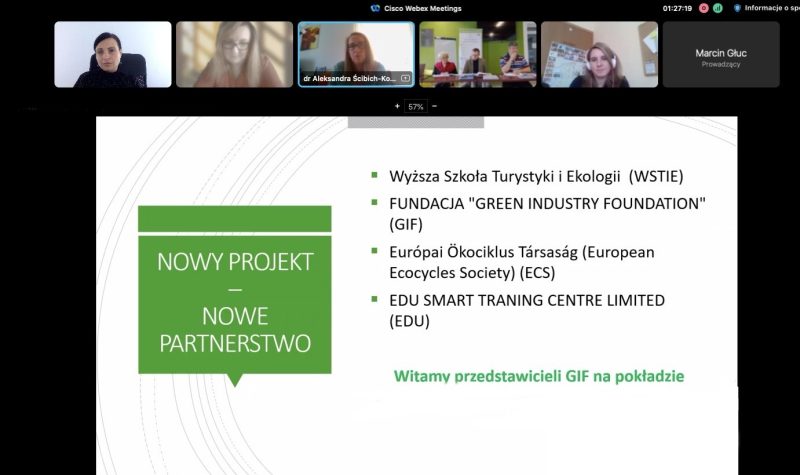
On April 28, 2022, the first international meeting of the project “Sustainable Development Academy – ESG Management” took place. Representatives from all partners participated in the meeting:
Higher School of Tourism and Ecology (WSTIE) – Poland
GREEN INDUSTRY FOUNDATION (GIF) – Poland
Európai Ökociklus Társaság (European Ecocycles Society) (ECS) – Hungary
EDU SMART TRAINING CENTRE LIMITED (EDU) – Ireland
On behalf of the Consortium Leader, the meeting was officially opened by Chancellor Maria Grzechynka. During the meeting, project activities, schedule, communication rules, and project management were presented. The partners clearly defined the actions and deadlines for the first task in the project. The Partnership Council was also established, and Partner Coordinators were appointed. Discussions mainly focused on substantive areas such as sustainable development and green transformation in Europe. A significant amount of attention was also devoted to project promotion, including social media activities and dissemination efforts – establishing personal, expert, and institutional networks.
The project “Sustainable Development Academy – ESG Management” has commenced!

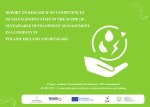
The project partners have published the “Report on Competency Assessment of Management Staff in Sustainable Development Management in Enterprises in Poland, Ireland, and Hungary.”
Contemporary organizations must consider various types of risks (including climate-related) and holistically adapt to the requirements of sustainable development policy. The project partners have decided to respond to this need by starting with a comprehensive diagnosis of the European business reality. The published “Report on Competency Assessment of Management Staff in Sustainable Development Management in Enterprises in Poland, Ireland, and Hungary” represents the culmination of these efforts.
Research methods:
The research was conducted using an online survey questionnaire with a sample of 304 individuals (100 in Poland, 102 in Hungary, and 102 in Ireland). Additionally, the research was supplemented and detailed by a series of individual in-depth interviews (IDI) with representatives of managerial staff in micro, small, and medium-sized enterprises (MSMEs).
Conclusions from the report:
After analyzing the obtained data and situating the results in the context of European market realities, several key trends and phenomena were identified:
- It was noted that contemporary organizations must actively respond to challenges related to climate change.
- This requires managerial staff to possess comprehensive competencies in risk management, technology, environmental protection, and often skills in other disciplines as well.
- Therefore, a change in the profile of education is necessary – across all industries. For example, research conducted in the agricultural production sector indicates that managerial staff are required to have knowledge of quality chains, process engineering, and new cultivation technologies.
- Managerial education should be interdisciplinary to enable them to acquire knowledge in sociology, psychology, economics, and technology.
- Managerial education must be practical, and training programs must be individually tailored to the needs of each industry. Therefore, the use of universal templates is not feasible. Education should start with assessing the needs of a particular group and then adapting educational content to address key challenges while also considering the latest trends in ESG.
Practical Utilization of Report Findings:
The report, although just one component of project work, holds significant practical importance on its own. It contains crucial information regarding sustainable management and its impact on business development.
- The report can prove beneficial to anyone interested in the advancement of sustainable business and acquiring new competencies related to ESG management.
- It can also be utilized by entrepreneurs seeking to align their companies with requirements related to sustainable development and climate issues.
Partners hope that the report will serve as an important source of information and inspiration for all entities aiming to contribute to economic development in a sustainable and green manner. Furthermore, it will be instrumental in precisely directing further project work, ultimately leading to the implementation of an innovative training program and the development of vocational education related to sustainable development.
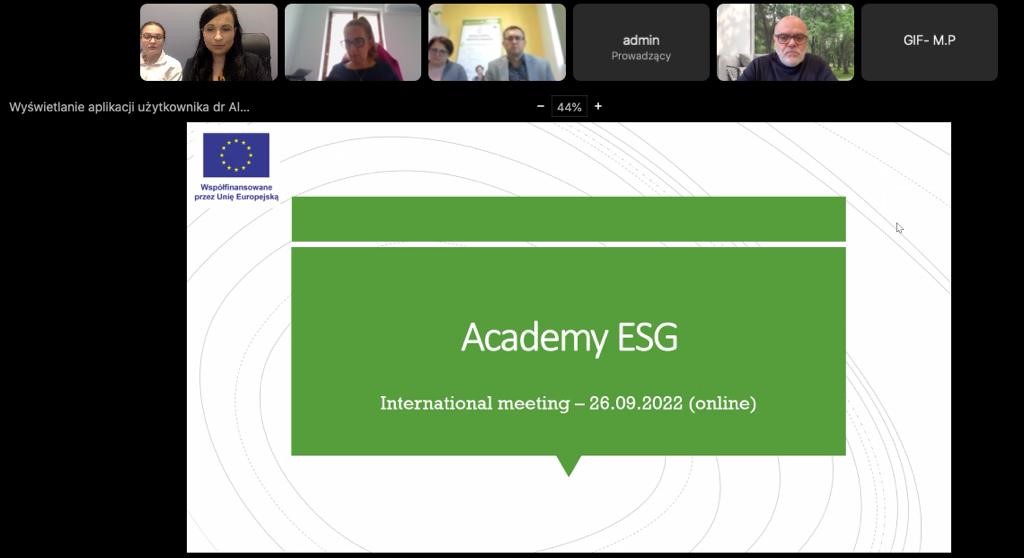
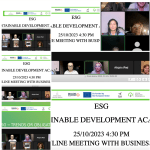
The second international meeting took place on the WEBEX platform on September 26, 2022. The meeting proceeded according to the following agenda:
- Summary of Task O1
- Task O2 – kick-off (scope, duration, budget)
- Two operational teams and their tasks within O2
- Discussion and questions
The aim of the meeting was to summarize the work on the outcome of O1 (survey of managerial staff competencies in sustainable management) and to verify and monitor the work on the outcome of O2 (Development of a description of competencies in sustainable management). The meeting enabled detailed planning of further work on the Program of each partner. During the meeting, partners also exchanged experiences, conducted an educational analysis related to sustainable development in light of the European Green Deal, and managed project-related matters – discussing past work, its alignment with the schedule and budget, partnership cooperation, and activity evaluation.

The project partners have developed a description of competencies in sustainable management.
“The Sustainable Development Academy – ESG Management” is an international project carried out by the Higher School of Tourism and Ecology in collaboration with partners from Poland, Hungary, and Ireland. The initiative aims to increase knowledge about sustainable development among managerial staff of enterprises, made possible through specialized training sessions that build skills in ESG. Their foundation lies in a thorough analysis of market realities and the identification of a range of competencies requiring urgent development.
The partners – WSTiE, EDU Smart Training Centre Limited, European Ecocycles Society, and Green Industry Foundation – have pooled their experiences and knowledge to create a fully practical description of competencies in sustainable management at two levels of proficiency. It includes a detailed description of standards, challenges, and opportunities, which served as the starting point for the development of an innovative training program and development materials. Based on the research conducted within the project, desired skills for managerial staff were identified, along with methods for acquiring them, developed in the form of a professional competence map.
The matrix was prepared considering two levels of proficiency among staff, enabling more accurate responses to the real needs of entrepreneurs. It includes a list of skills related to sustainable management that should be possessed by both senior management (advanced level) and middle-level representatives (basic level). The training program, created based on these findings, addresses market demand and aligns with the necessary requirements that socially responsible businesses must meet.
Trainings from the “Sustainable Development – ESG Management” series are now available!
As part of the “Sustainable Development Academy – ESG Management” project, implemented by WSTiE in collaboration with partners (EDU Smart Training Centre Limited, European Ecocycles Society, and Green Industry Foundation), not only a specialized report and a detailed matrix of managerial competencies have been created, but also a series of professional trainings that allow for the acquisition – and verification – of key management skills in the ESG area.
The implementation of economic transformation requires entrepreneurs to make thorough changes in their business strategies, abandoning old, unproven models and transitioning to new, sustainable, and environmentally friendly approaches to business. As research on climate awareness shows, even large corporations have difficulty adapting to new requirements. Specialized training programs, based on precisely identified competency gaps and tailored to the level of managerial staff, can be a response to these challenges.
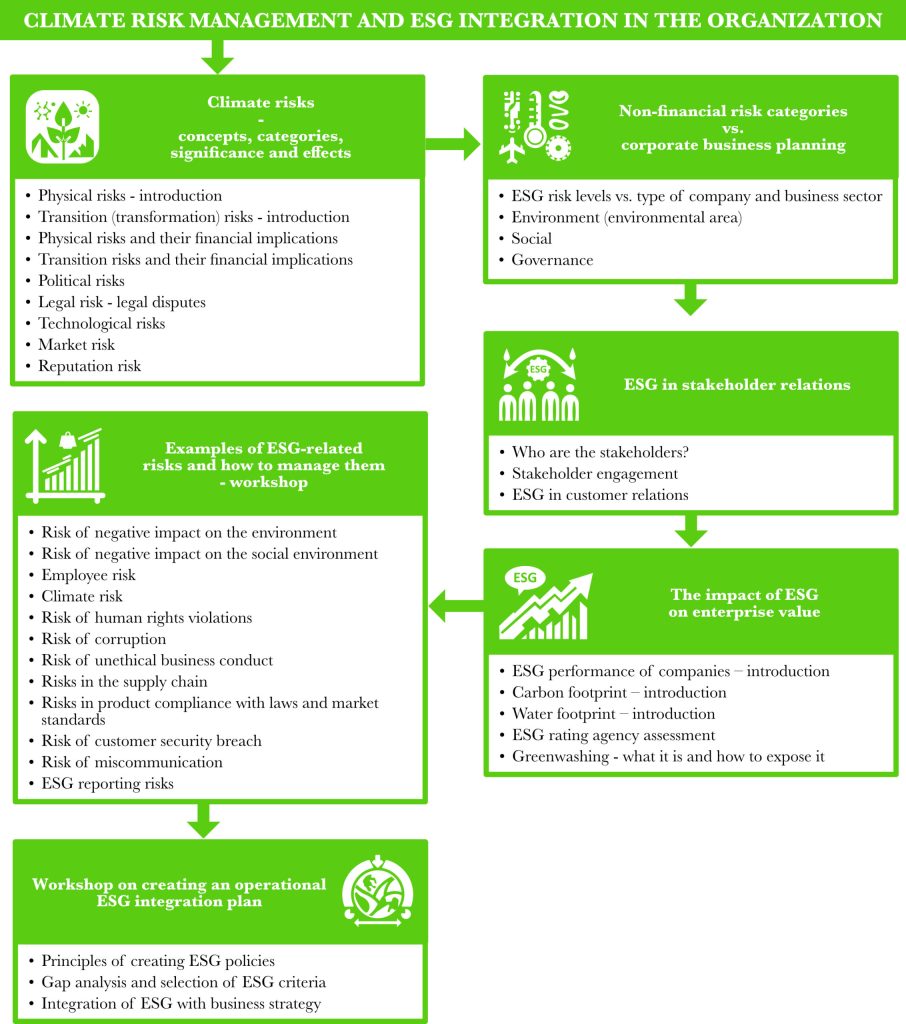
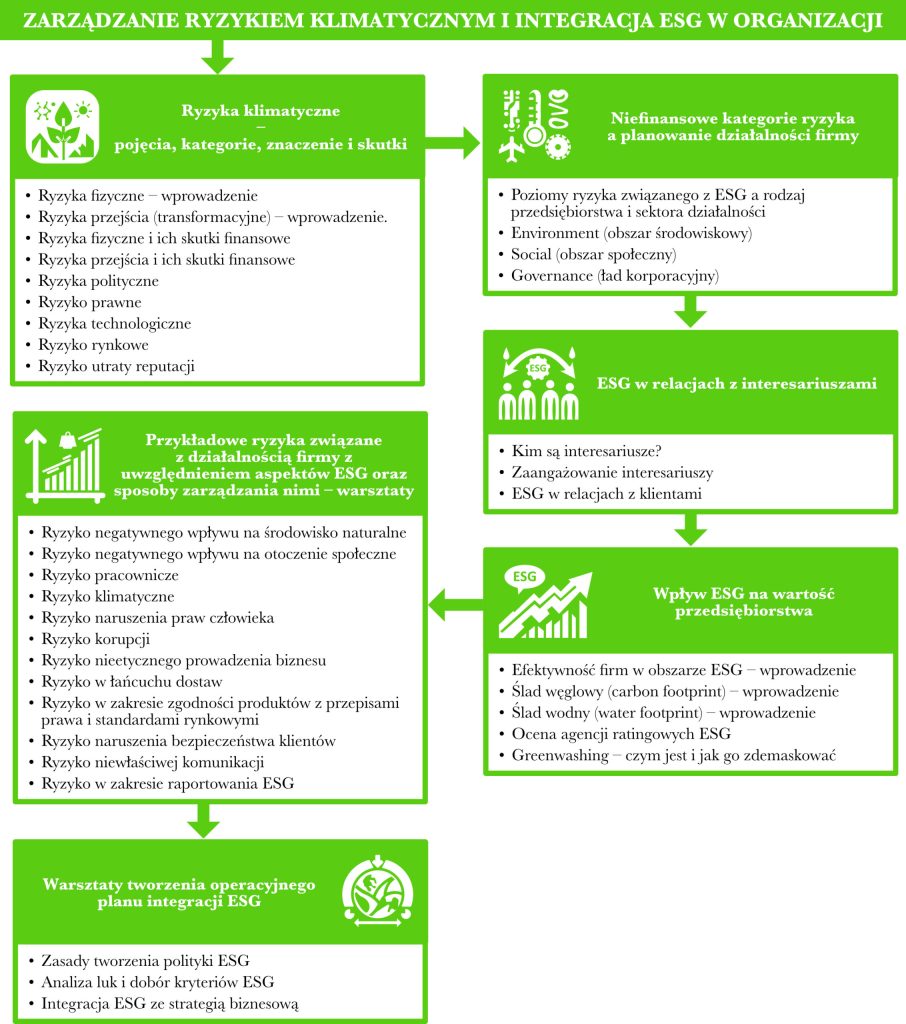
As part of the project implemented by WSTiE with partners, a series of trainings in the field of sustainable development has been developed, which are now available in each of the partner countries. As part of the course program, participants will acquire leadership skills in the ESG area, climate risk management, and integration of green transformation requirements in the organization. Additionally, they will gain knowledge about formulating effective KPI indicators, enabling the measurement of the organization’s impact and dependencies on the environment, as well as preparing reports integrated with international standards and practices.
The training program is validated, allowing for the real verification of the level of acquired competencies and indicating potential areas requiring further improvement. The trainings are aimed not only at representatives of the business world but also at all entities involved in vocational education and the enhancement of managerial and executive competencies. For user convenience, the trainings are conducted online and are available in several language versions: Polish, English, and Hungarian.
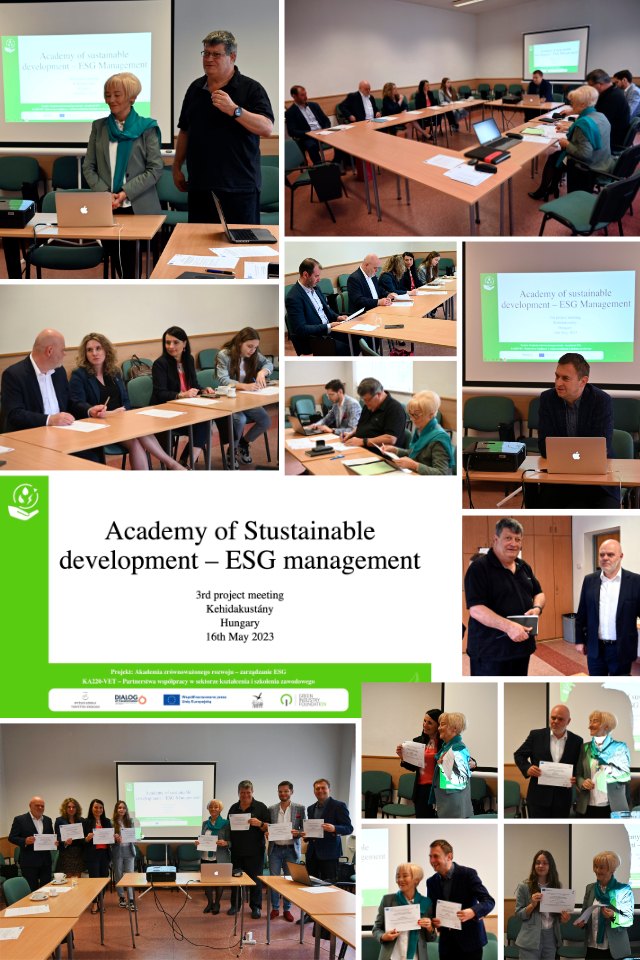
#PROJECTS | Another meeting is behind us, during which we worked with partners on tools supporting the #ESG idea❗️ “Sustainable Development Academy – ESG Management” is an international project aimed at increasing knowledge of sustainable development among managerial staff.
➡️ The partners’ meeting of the initiative, which took place on May 16, 2023, in Hungary, proved to be an important stage in the implementation of this task. Thanks to the exchange of experiences and knowledge, the project team could not only summarize the impressive actions taken so far and assess the progress of work but also plan further stages of the implementation process – including an international conference, about which we will tell you more soon.
Huge thanks to all partners for their involvement and invaluable substantive contribution to the work: European Ecocycles Society, E D U S M A R T Training Centre Limited, Green Industry Foundation.
Another international project meeting is now behind us.
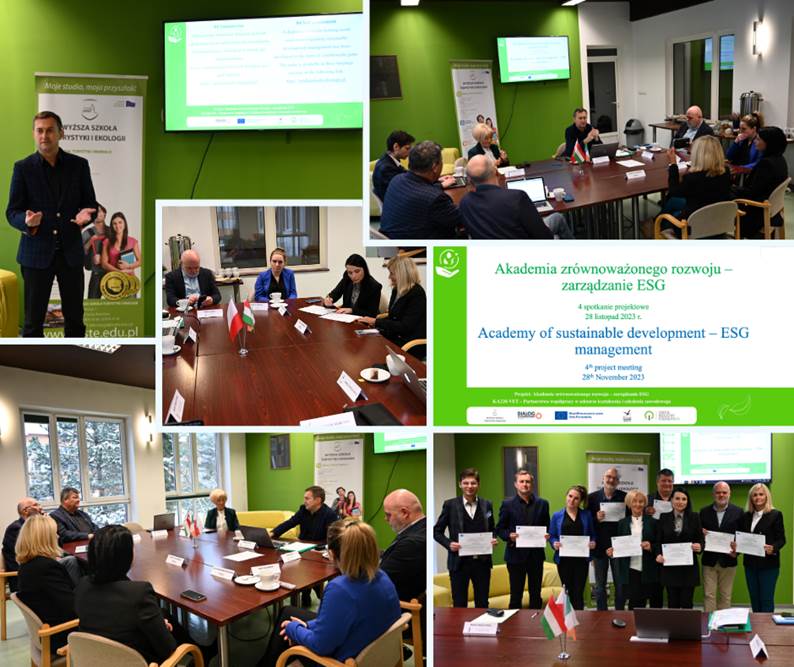
This time, on November 28, 2023, the Higher School of Tourism and Ecology in Sucha Beskidzka hosted representatives of the project partners with whom it collaborates.
During the meeting, we discussed the project results, summarized our work, and planned the December recruitment tasks and pilot training workshops for representatives of MSMEs in January 2024. Our pilot workshops will equip managers with the necessary knowledge and help them understand the principles of ESG and sustainable development.
Currently, in accordance with the project implementation schedule, we are jointly developing tools to support the implementation of previously prepared training programs. We will soon make them available to you. Among them will be podcasts, multimedia presentations, worksheets, case studies, and sample scenarios for trainers.
During the meeting, the partners also planned dissemination meetings in their respective countries in February 2024, while WSTiE, as the project leader, will organize a dissemination and closing conference in March 2024.
We thank all the partners for their involvement and invaluable substantive contribution to the work: European Ecocycles Society, E D U S M A R T Training Centre Limited, Green Industry Foundation.
We are pleased to inform you that from January 25th to 28th, 2024, in Sucha Beskidzka, we conducted a pilot training for top-level management representatives in the MSME sector as part of our project, “Sustainable Development ESG Academy,” co-financed by the European Union funds.
During the four training-workshop days, participants had the opportunity to familiarize themselves with thematic issues such as:
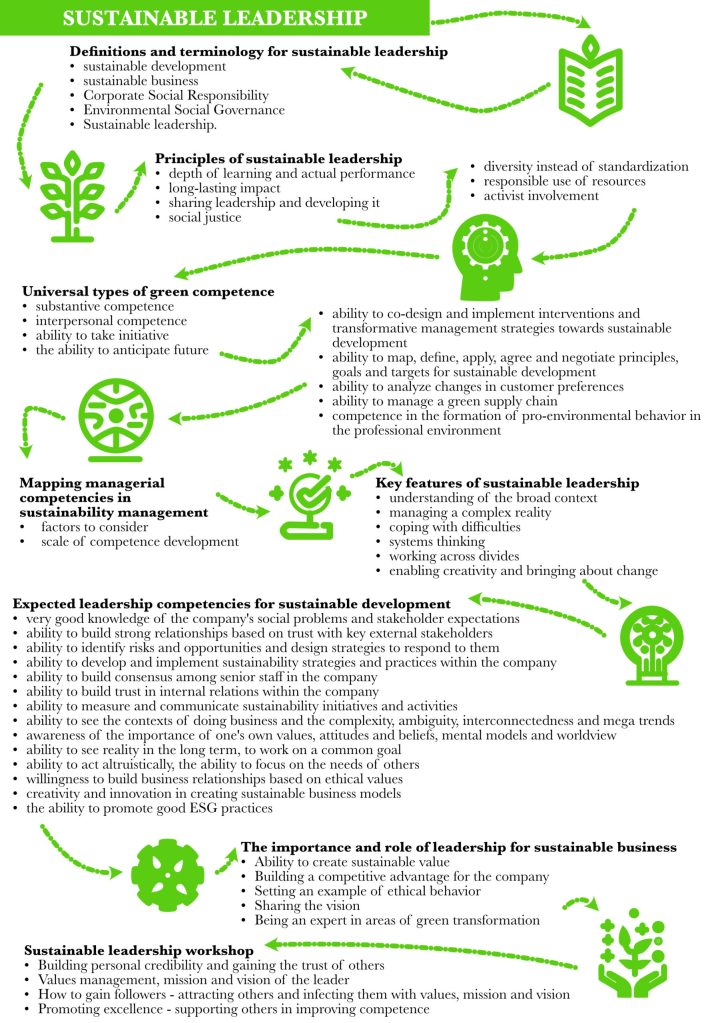
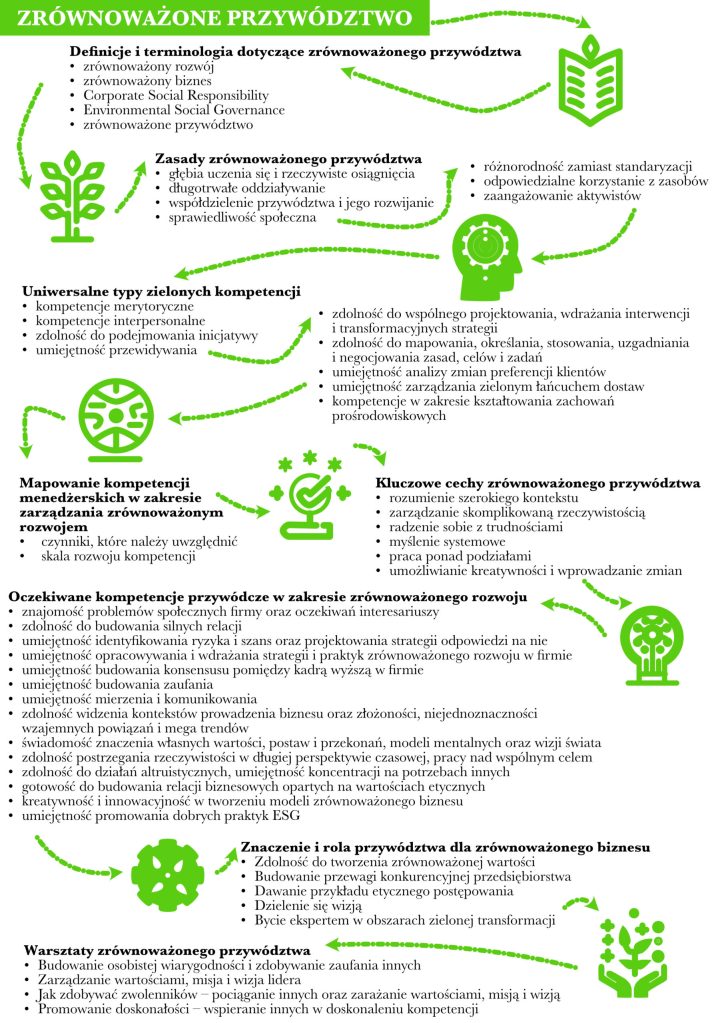
- Expected leadership competencies in sustainable development
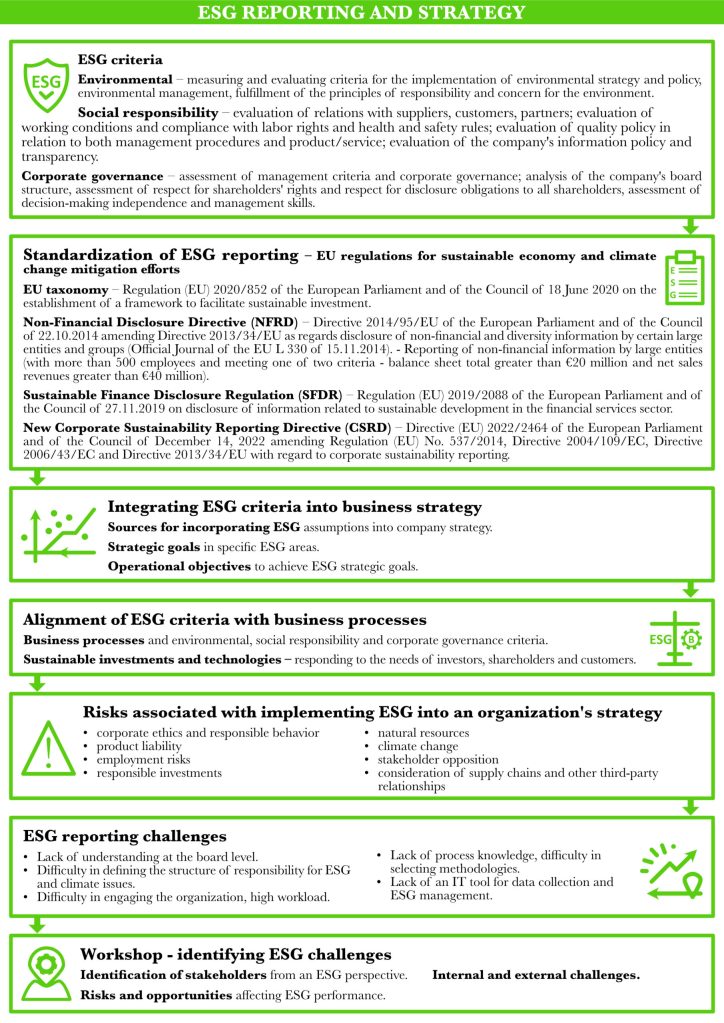
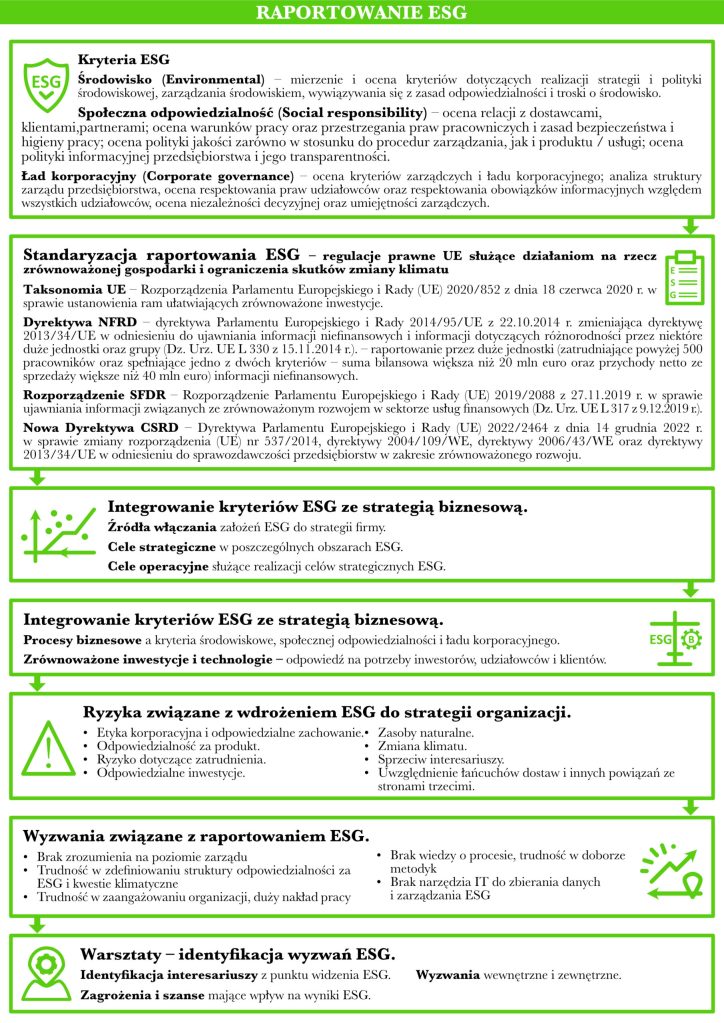
- ESG reporting
- Integrating ESG criteria with business strategy
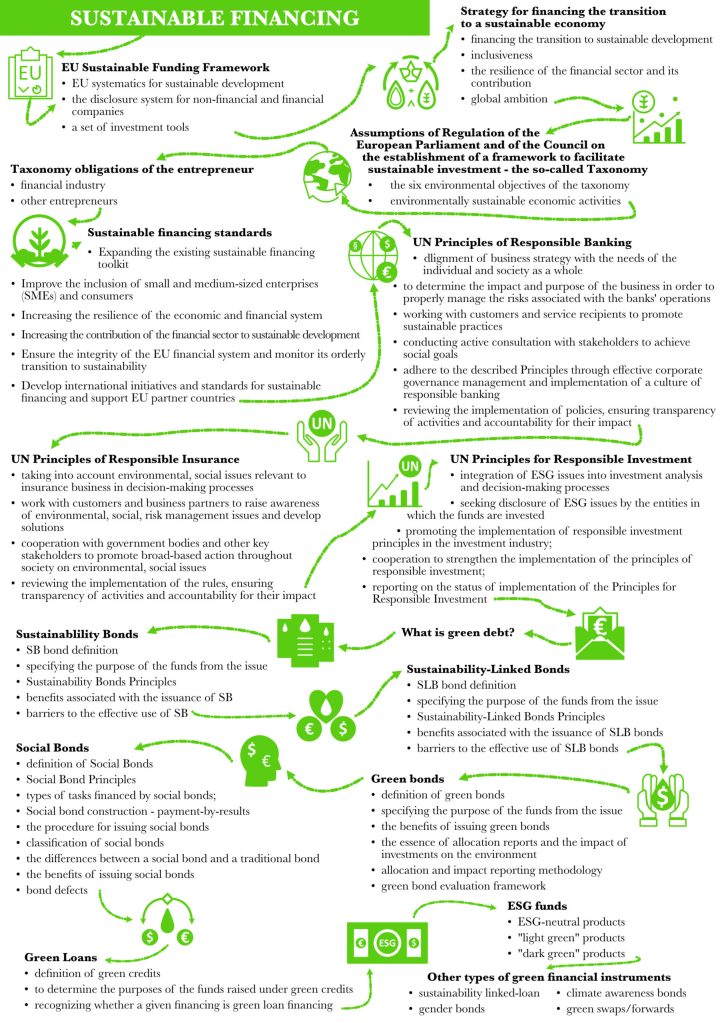
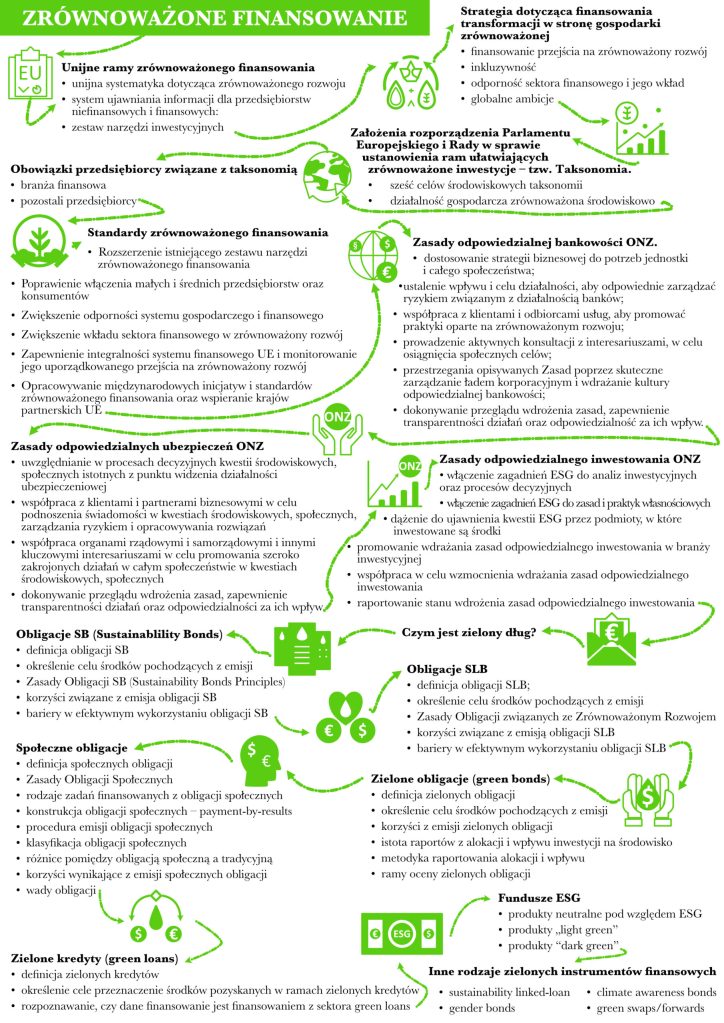
- Sustainable financing
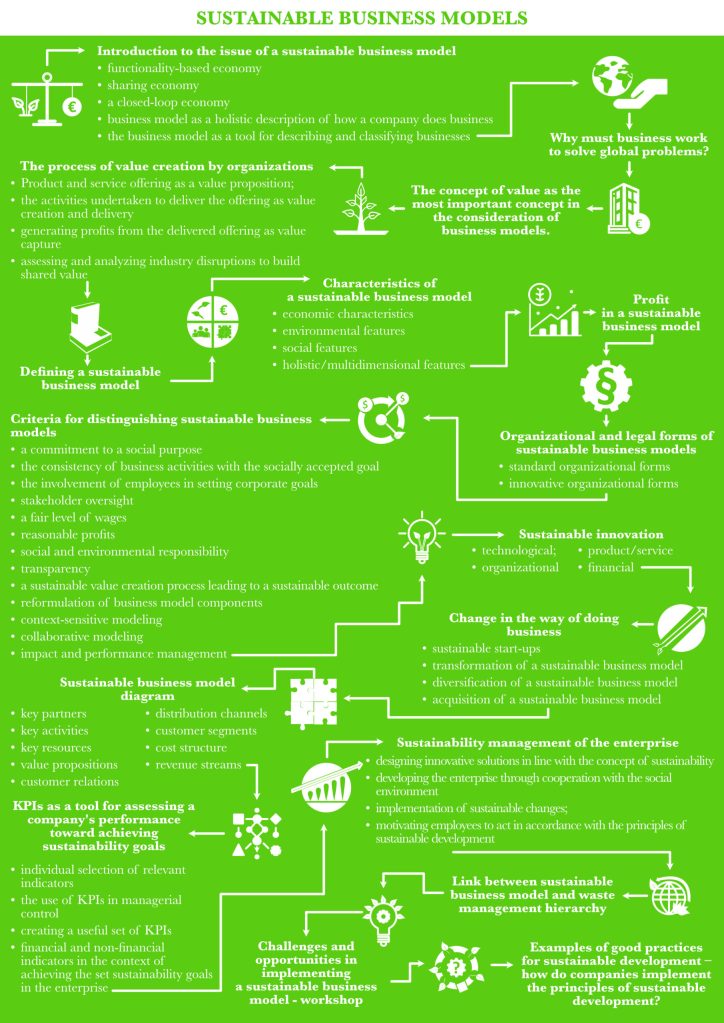
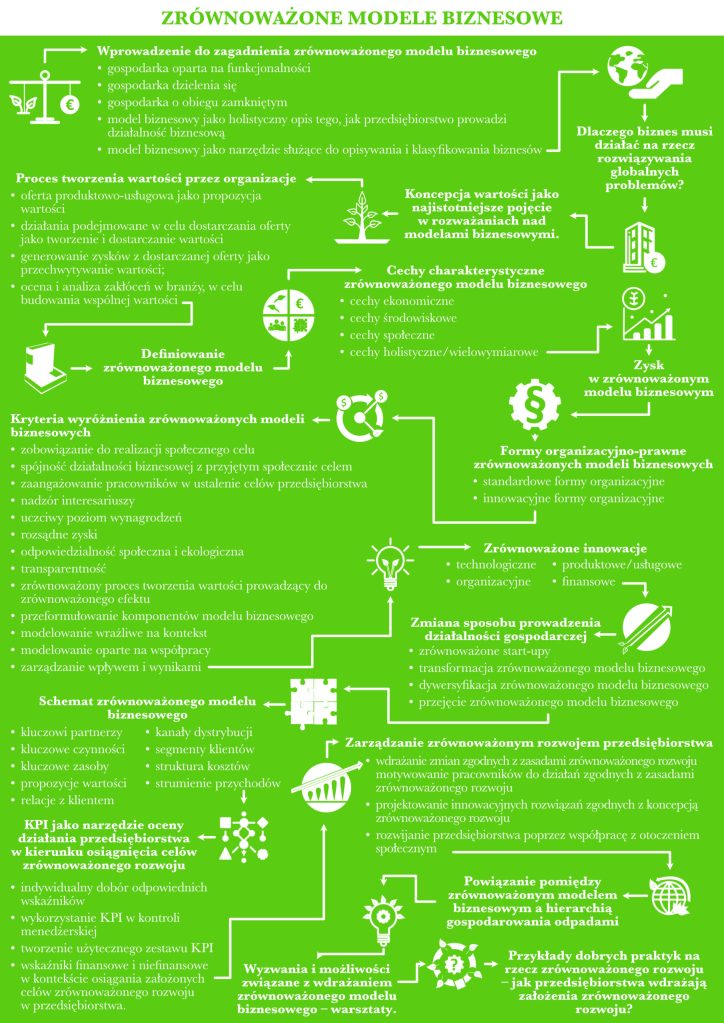
- Sustainable financial models
- KPI as a tool for assessing the company’s progress towards sustainable development goals
- Climate risks – concepts, categories, significance, and consequences
- ESG in stakeholder relations
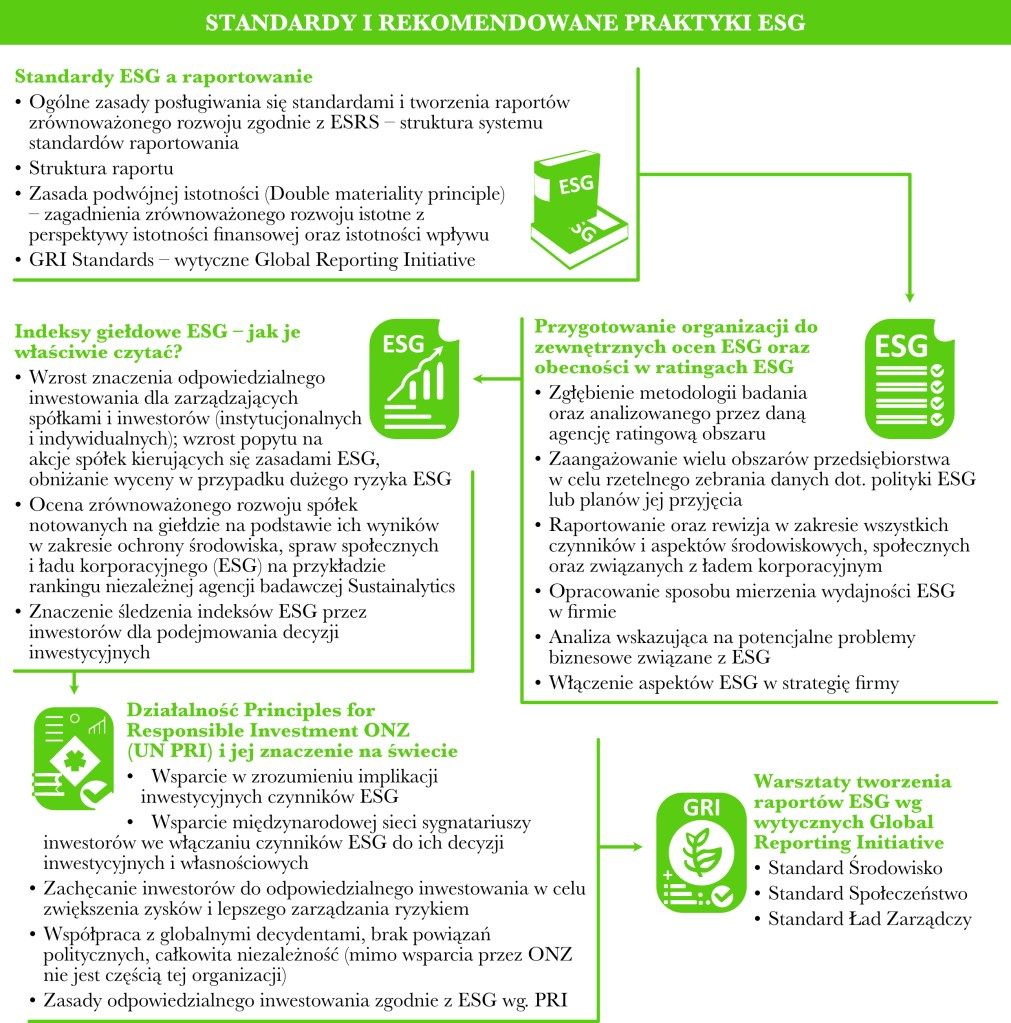
- General principles of creating sustainable development reports in accordance with
- We would like to sincerely thank all participants and experts for their active participation and involvement. Your feedback is very valuable to us, and we will definitely take it into account in the final editing of all materials developed as part of the project.
We hope that the knowledge gained by you, as well as the new contacts established, will contribute to further development of your business activities.
We are also confident that participating in the workshops will allow you to more thoroughly assess the impact of our actions on society and the environment and take appropriate measures to contribute to sustainable development.

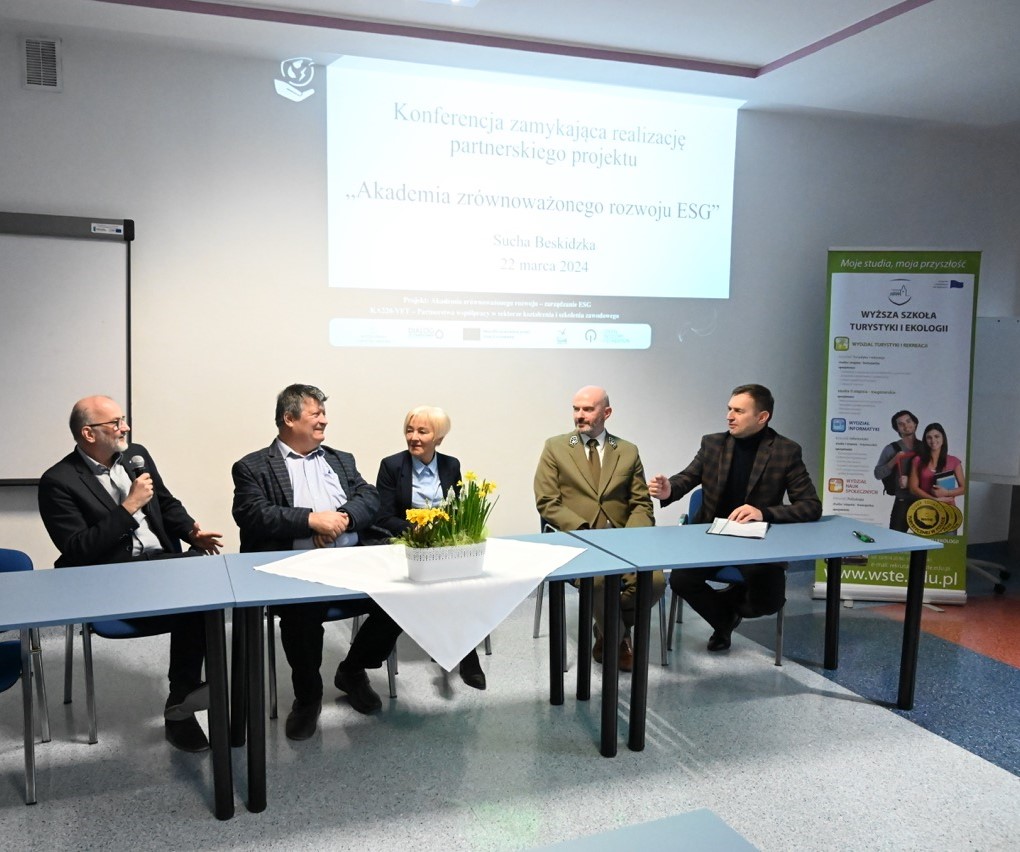
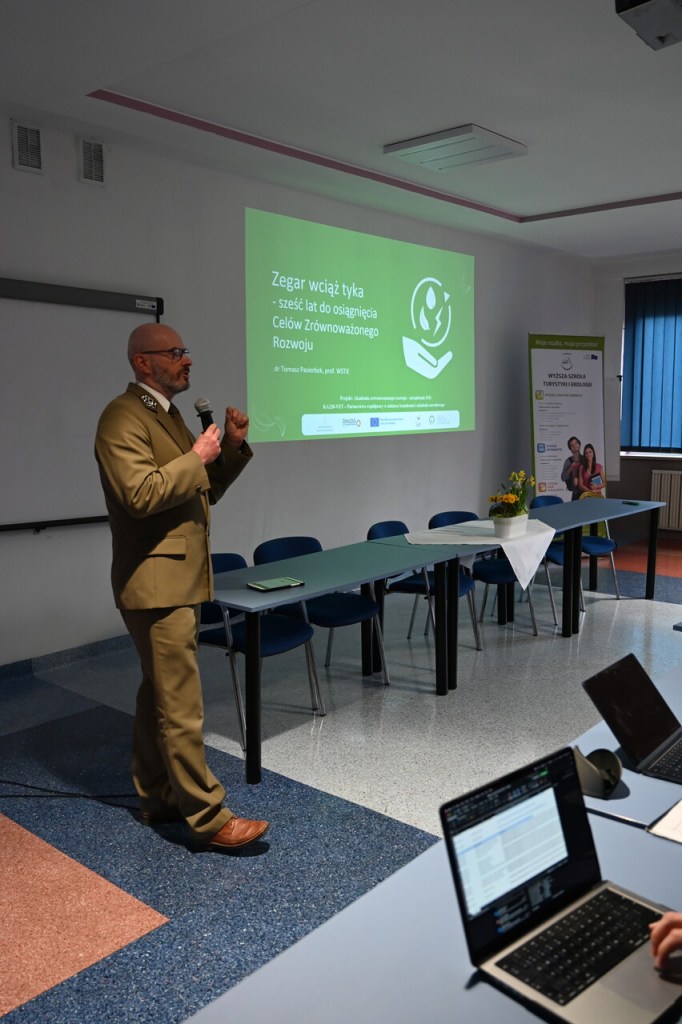
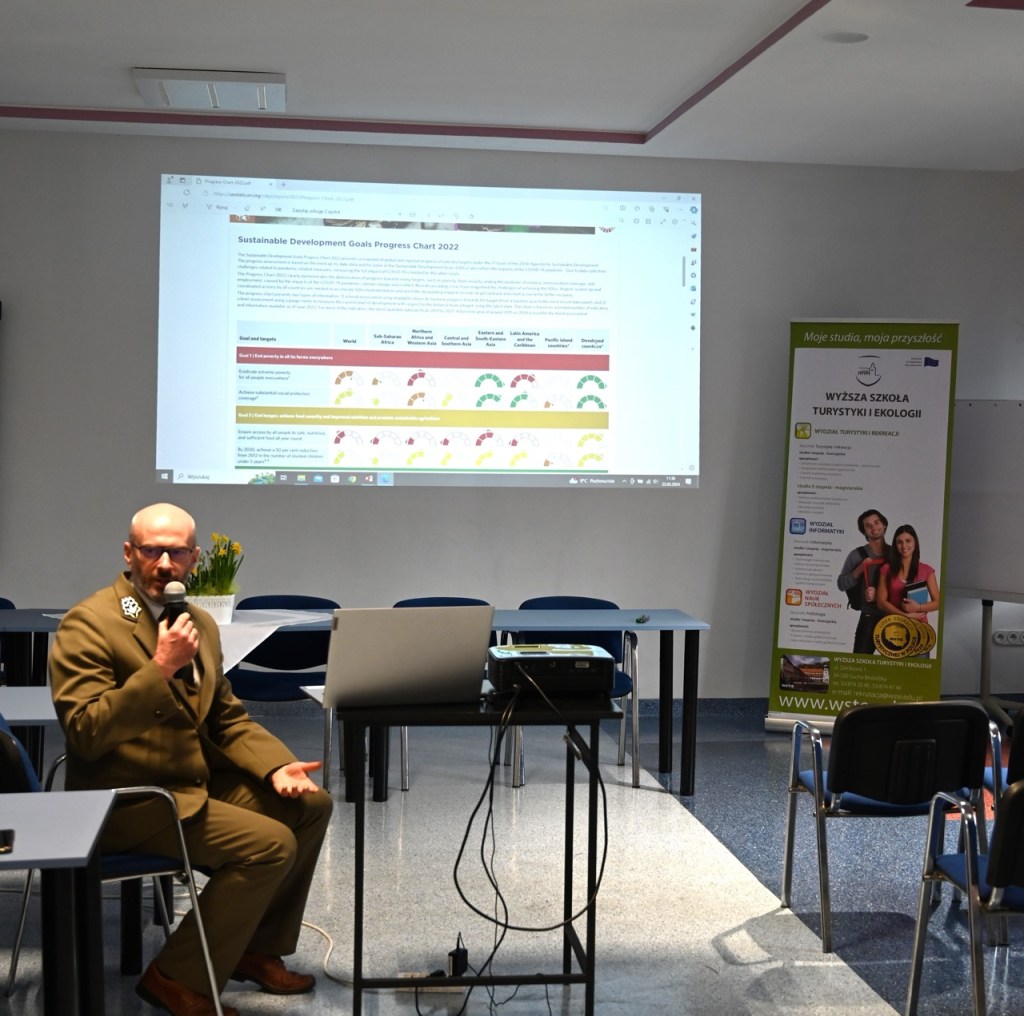
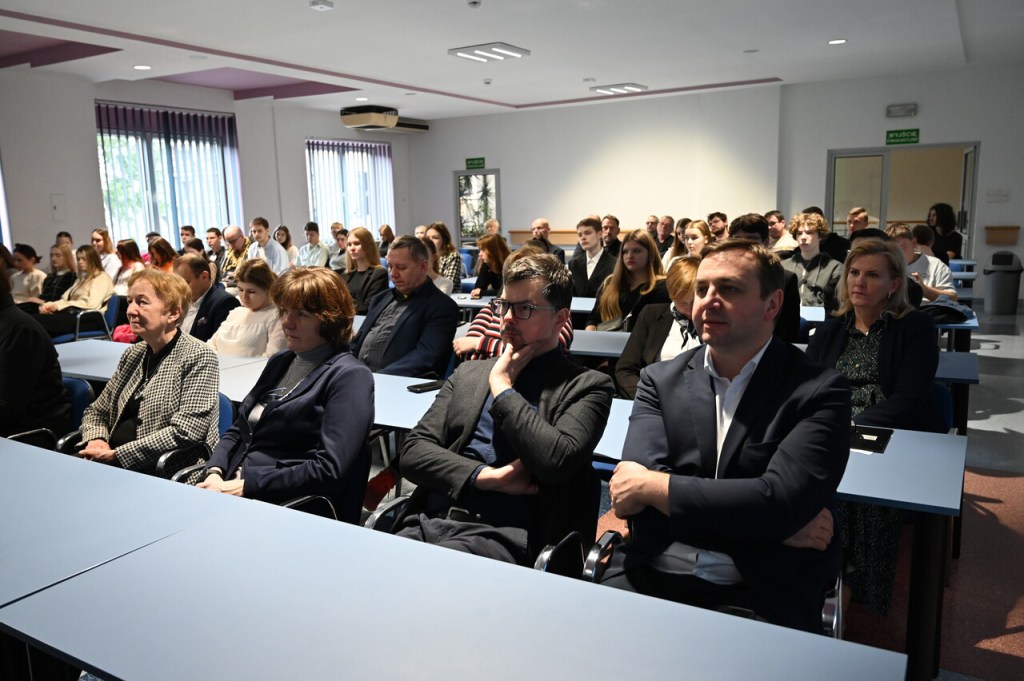
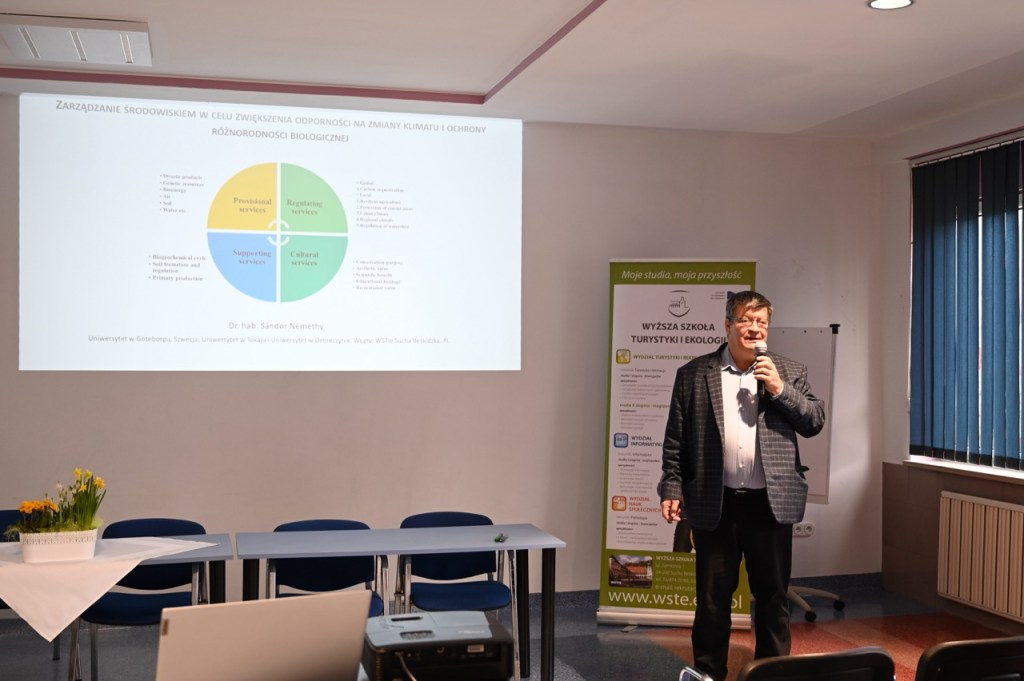
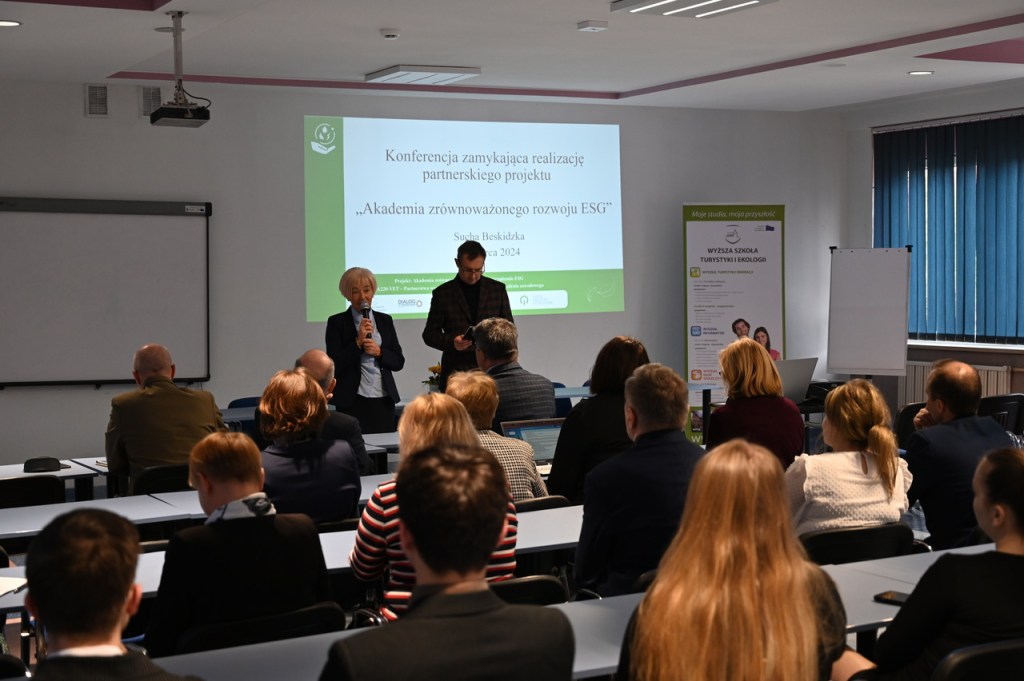
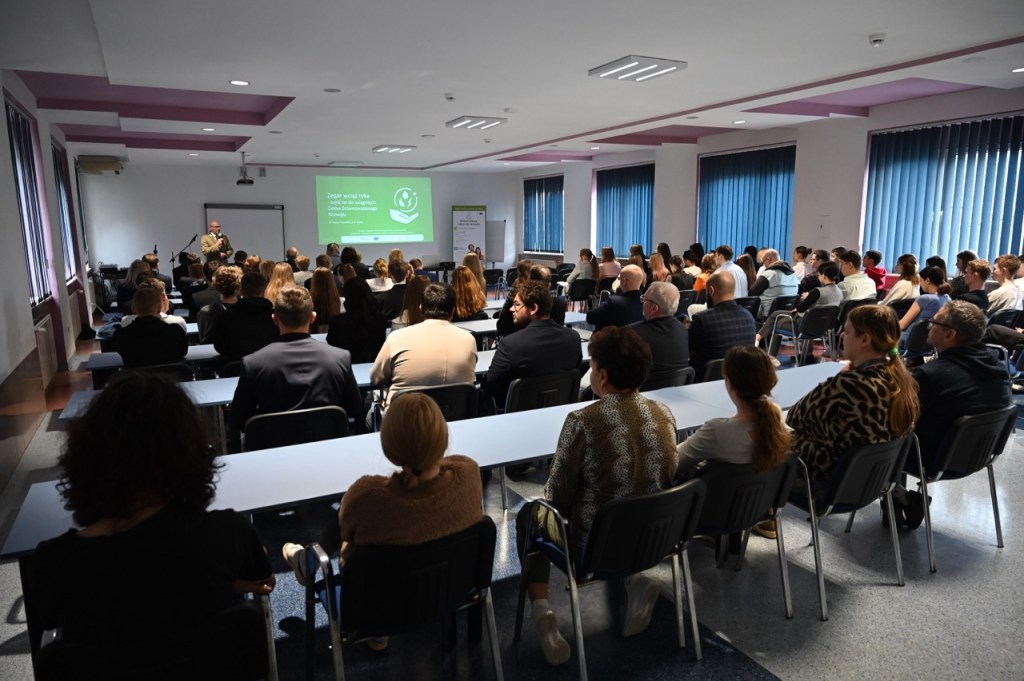
On March 22, 2024, the University of Tourism and Ecology hosted experts, scientists, and practitioners focused on exchanging knowledge and experiences in the field of sustainable development. The scientific conference that brought them together was the culmination of a project carried out in collaboration with Edu Smart Training Centre Limited, the European Ecocycles Society, and the Green Industry Foundation. Over the course of two years, the actions aimed at bringing about a real change in awareness regarding sustainable management.
During the conference, a rich thematic program was presented, with industry experts playing a leading role. Dr. Marek Nocoń, a professor at the University of Tourism and Ecology, presented the assumptions and achieved results and products of the international partnership project. Then, Dr. Sandor Nemethy from the European Ecocycles Society in Hungary shared the project partners’ experiences and good practices in environmental management in the face of climate change. Bartłomiej Mróz, representing the University of Tourism and Ecology, discussed the training program developed as part of the project, while Dr. Tomasz Pasierbek from the Babia Góra National Park explained the significance of the ESG approach over time. The conference was concluded with a panel discussion involving representatives of the academic community and the business world, including Maria Grzechynka (Chancellor of the University of Tourism and Ecology), Dr. Sandor Nemethy (President of the European Ecocycles Society), Dr. Tomasz Pasierbek (Director of the Babia Góra National Park), and Dr. Tamas Kopeczi-Bocz (representative of the entrepreneurship sector, lecturer at the University of Tokaj).
The conference not only provided an opportunity to summarize the activities of the project consortium but also indicated practical directions for further actions. Thanks to the project, it will be possible to implement an innovative training program in the vocational education sector, which will contribute to increasing the knowledge and expertise of the expert staff. Moreover, the project will have a positive impact on the implementation of the European Green Deal and the New Taxonomy, resulting in long-term perspectives. As members of the project consortium emphasized, such initiatives, undertaken in international cooperation, make it possible to translate theory into practice and actively build corporate social responsibility in the context of sustainable development.

Dear Sir/Madam,
We invite you to review the materials developed within the various modules.
O4: Self-Assessment (Self-Assessment Form and Training Needs Analysis)
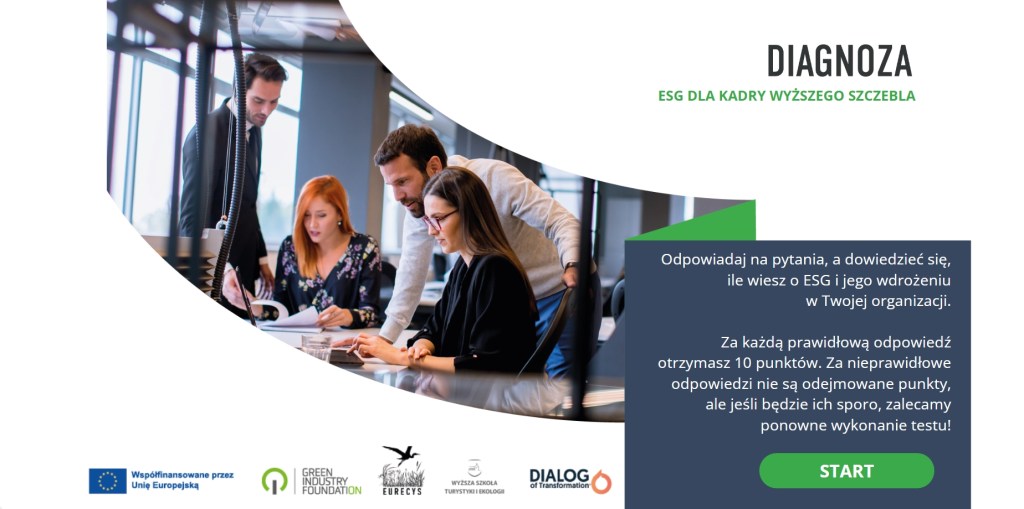
As part of the ESG Academy project, a training needs analysis form focused on sustainable development management has been created. The purpose of the form is for participants to independently verify their existing competencies. This helps in selecting the appropriate course from the planned Training Program.
Results:
- Gathering Information on Existing Competencies
- Analysis of Needs Related to Function/Sector/Industry
- Analysis of Feedback Received
- Assessment of Initial Status
- Assessment of Final Status
- Application of the Diagnosis
The form was used before, during, and after the course:
- Before the course: Baseline competencies and needs of participants were identified.
- During the course: The training program was refined and expanded.
- After the course: Training effects were evaluated and achieved competencies were assessed.
Languages of the Result:
- English
- Polish
- Hungarian
Result O4 provides a comprehensive tool for training needs analysis, supporting sustainable development management and contributing to the effective development of participants’ competencies.

O5 Development Materials – Sustainable Development – ESG Management – MODULE I (for senior management)
Program:
Module I – for senior management
Determinants of Sustainable Development Management
- Paris Agreement, Agenda 2030
- European Green Deal
- New EU Taxonomy
Sustainable Business Strategy
- Sustainable business models
- Decarbonization strategy
- Sustainable supply chain
ESG Strategy
- Investor expectations
- ESG ratings and analyst evaluations
- Impact of ESG on enterprise valuation
Sustainable Finance
- Sustainable finance products
- Green investments and environmentally sustainable activities
- Process of acquiring and issuing green financial instruments (green bonds, sustainability-linked loans)
Sustainable Corporate Governance
- Role of the Board of Directors and Supervisory Board
- Audit and internal control
- Managing risks and opportunities arising from climate change
Educational materials consist of:
- 2 podcasts – introduction to the module
- 1 thematic multimedia presentation
- 10 individual worksheets
- 4 case studies
- 2 work scenarios
- 1 infographic
As part of the result, Pilot Workshops were conducted during which future users were trained on the Program. The evaluation of the workshops provided insights for consideration in developing the final version of the result.
Languages of the Result: English, Polish, Hungarian
O6 Development Materials – Sustainable Development – ESG Management – MODULE II (for middle management)
Program:
Module II – for middle management
Sustainable Reporting:
- Integrated reporting
- Non-financial data reporting standards
- Climate reporting
Scenario Analysis and Climate Risks:
- Climate change scenarios
- Identification of climate-related risks
- Integration of climate risks into corporate risk management systems
ESG Management:
- ESG ratings
- ESG risks
- Handling ESG controversies
Corporate Social Responsibility (CSR):
- Stakeholder dialogue
- CSR strategy
- Modern CSR communication
Sustainable Development Management:
- Integration of CSR, ESG, and sustainable development aspects
- Tools for operationalizing and implementing sustainability strategies
- Sustainability KPIs
Materials:
- Respond to current needs for implementing new EU climate guidelines
- Provide a knowledge base at various levels regarding ESG management
- Reduce financial barriers and the overall cost of competency enhancement
Pilot Workshops will be conducted as part of the result, during which future users will be trained on the Program. The evaluation of the workshops will provide insights for consideration in developing the final version of the result.
Languages of the Result: English, Polish, Hungarian
Welcome to familiarize yourself with the developed materials within the framework of individual modules.

ESG ACADEMY OF SUSTAINABLE DEVELOPMENT December 23 work


December is a month of wrapping up our ESG Academy of Sustainable Development work. We are polishing our materials for High and Medium Level Managers.
Based on our Partner’s work 4 days workshops will be run in Poland in Jan 2024 for business owners to familiarise them with ESG topics.
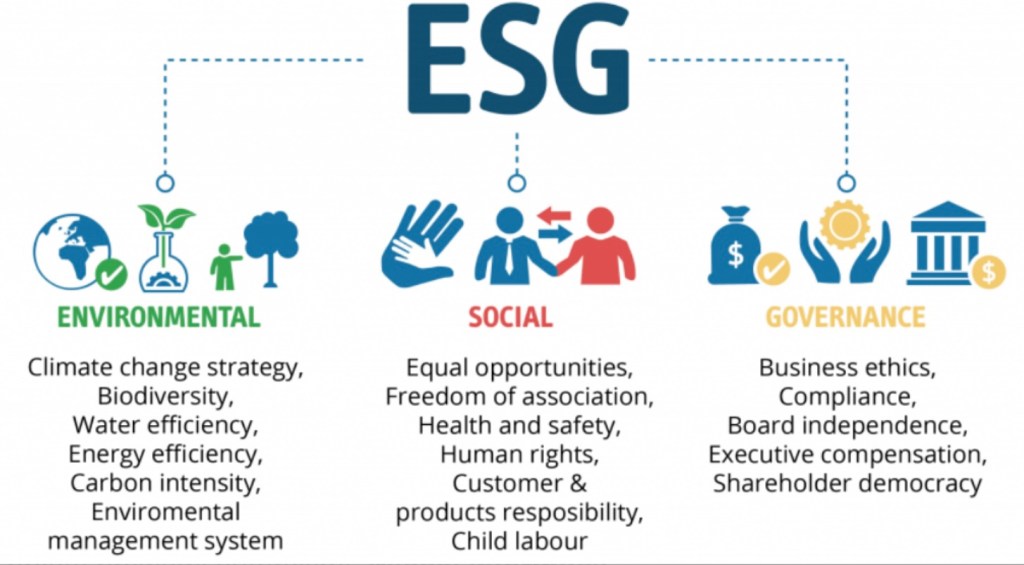
ESG topics are important things that small businesses should think about. ESG stands for Environment, Social, and Governance.
Environment means taking care of nature. It’s important for small businesses to think about how they can protect the environment, like using less energy or recycling.
Social means being nice to people. Small businesses should think about how they treat their employees and customers. They should be fair and kind to everyone.
Governance means having good rules and being responsible. Small businesses should have good leaders who make good decisions and follow the rules.
Thinking about ESG topics is important for small businesses because it helps them be better for the environment, treat people well, and be responsible. It’s good for the business and for the world!
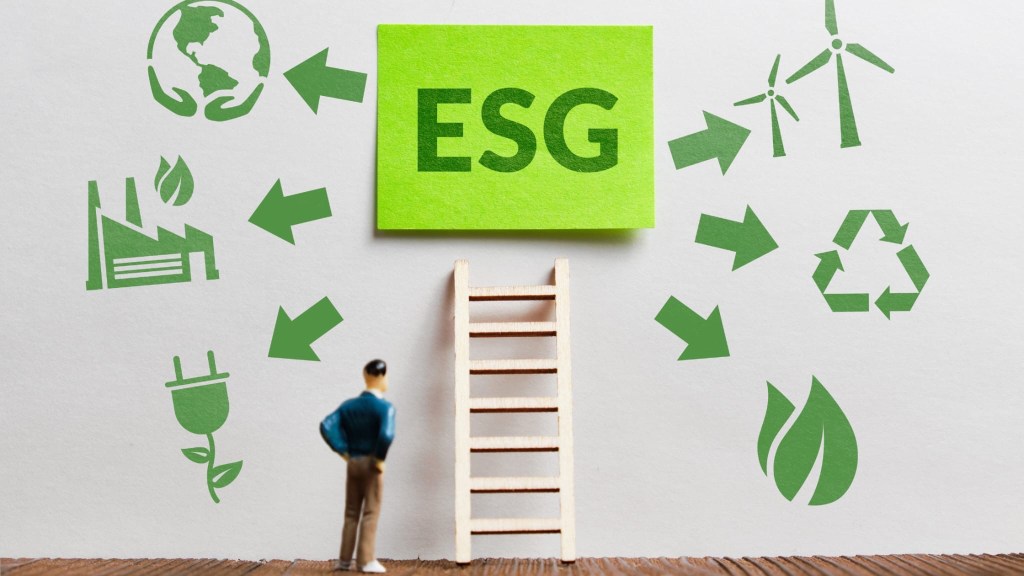
We believe, that ESG knowledge is crucial for managers and directors across EU. Why?
- Strategic Decision-making:
Understanding ESG factors allows managers and directors to make informed strategic decisions that consider environmental, social, and governance issues. This knowledge helps identify potential risks and opportunities, leading to better business outcomes.
- Stakeholder Expectations:
Stakeholders, including investors, employees, customers, and communities, increasingly expect businesses to prioritize ESG issues. Managers and directors need to be well-versed in ESG topics to meet these expectations and maintain positive relationships with stakeholders.
- Legal and Regulatory Compliance:
ESG knowledge ensures compliance with evolving laws and regulations related to sustainability, labor practices, and corporate governance. By staying informed, managers and directors can mitigate legal risks and avoid potential penalties.
- Reputation Management:
ESG issues significantly impact a company’s reputation. Managers and directors who understand ESG factors can proactively manage reputational risks by addressing environmental and social concerns, building trust, and demonstrating ethical behavior.
- Investor Relations:
Investors are increasingly considering ESG factors when making investment decisions. Managers and directors need to be knowledgeable about ESG topics to effectively communicate a company’s sustainability efforts and attract investors who prioritize responsible investing.
- Innovation and Competitive Advantage:
ESG knowledge fosters innovation by identifying opportunities for sustainable product development, operational efficiency, and cost savings. Managers and directors who integrate ESG considerations into their decision-making can gain a competitive advantage in the market.
- Long-term Value Creation:
ESG issues have a direct impact on a company’s long-term value and resilience. Managers and directors who understand and prioritize ESG factors can create sustainable business models, enhance brand value, and drive long-term financial performance.
Do you agree that ESG knowledge is vital for managers and directors? We believe so! It enables them to make informed decisions, meet stakeholder expectations, ensure compliance, manage reputation, attract investors, drive innovation, and create long-term value for the company.
Check our links with other events:



Sustainable development is important for several reasons.
Sustainable development aims to meet the needs of the present generation without compromising the ability of future generations to meet their own needs. It recognizes the finite nature of our planet’s resources and seeks to ensure their responsible use and conservation. By promoting sustainable practices, we can ensure that future generations have access to the same resources and opportunities that we do today.
Sustainable development takes into account the interconnectedness of environmental, social, and economic factors. It recognizes that these aspects are all interconnected and must be balanced to achieve long-term prosperity. By addressing environmental challenges, such as climate change and biodiversity loss, we can protect ecosystems, preserve natural resources, and mitigate the risks they pose to human well-being.
Sustainable development promotes social equity and inclusivity. It emphasizes the need to eradicate poverty, reduce inequalities, and ensure access to basic needs such as education, healthcare, and clean water. By promoting social justice and inclusivity, sustainable development aims to create a more equitable and fair society where everyone has equal opportunities to thrive.
Additionally, sustainable development is crucial for economic stability and resilience. It encourages innovation, resource efficiency, and responsible business practices. By integrating sustainability into business strategies, we can create new economic opportunities, enhance competitiveness, and foster long-term economic growth.
Sustainable development is important because it provides a holistic approach to address the pressing challenges we face today, such as climate change, poverty, inequality, and environmental degradation. It offers a pathway towards a more sustainable and resilient future, where the needs of both people and the planet are met in a balanced and equitable manner.
OUR DISSEMINATION EVENT
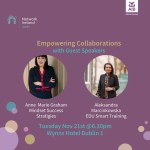
The dissemination event that took place in Dublin on February 24th centered around the topic of Sustainable Development – ESG Academy. The event began with the welcome and presentation of EDU SMART TC LIMITED and the project, followed by registration and welcoming of participants.
The agenda for the event was as follows:
9:30 AM – 10:00 AM: Sarah Lyons from NETWORK IRELAND and Aleksandra Marcinkowska provided an official introduction to the Sustainable Development topic.
10:00 AM – 10:30 AM: Kate Zalewska and Marta Kobus from IDK BY KATE UK further introduced the Sustainable Development topic.
10:30 AM – 11:00 AM: Julia Marcinkowska from EDU SMART TC LIMITED presented an overview of ESG (Environmental, Social, and Governance) in a nutshell, highlighting the project goals and outcomes.
11:00 AM – 11:15 AM: Break.
11:15 AM – 11:45 AM: Amy Irwin from CONSCIOUS KITCHEN discussed the direction society is heading in terms of environmental protection, particularly the “E” component in ESG.
11:45 AM – 12:30 PM: Sarah Naylor from SARAH NAYLOR ACADEMY focused on the “S” component, exploring the challenges and strategies for staying sustainable as a business in a multicultural environment and disadvantaged communities.
12:30 PM – 1:00 PM: Sarah Blake from EARTHOLOGY IRELAND discussed the “G” component, specifically addressing risk management in companies.
1:00 PM – 1:30 PM: Lunch break.
1:30 PM – 2:30 PM: An expert panel, moderated by Aleksandra Marcinkowska from EDU SMART TC LIMITED, delved into the question of what ESG means to them and why businesses should prioritize sustainability. The panel experts included Julia Marcinkowska, Sarah Lyons, Sarah Naylor, Sarah Blake, and Amy Irwin.
2:30 PM – 3:00 PM: Q&A session.
3:00 PM – 3:30 PM: Aleksandra Marcinkowska provided a summary of the event.
3:30 PM – 3:45 PM: Sarah Lyons closed the event.
Our dissemination event in Dublin on February 24th provided a platform for various experts to discuss and explore the importance of Sustainable Development and ESG in different aspects of society and business.
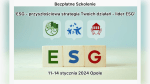
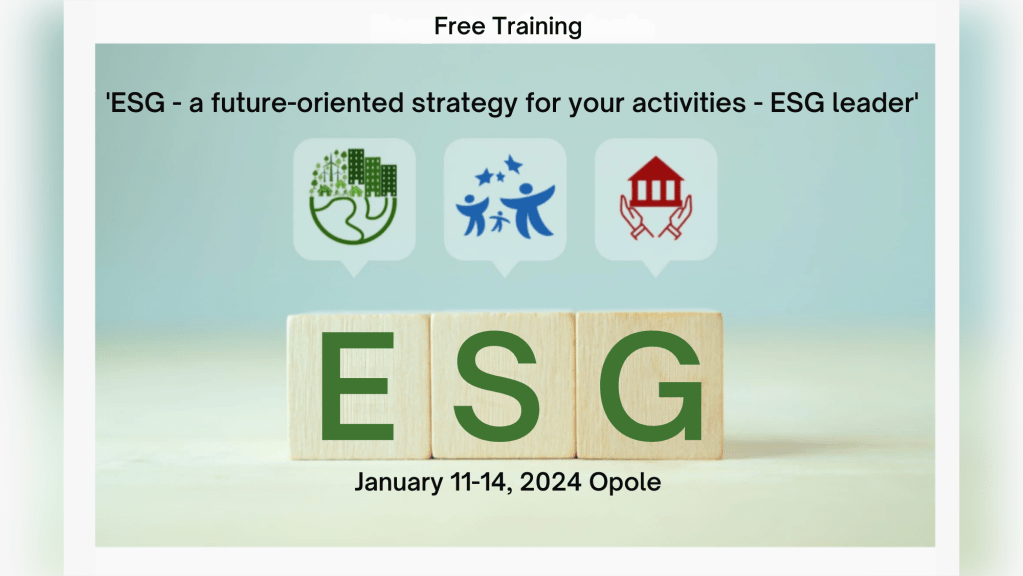
January 11-14, 2024, Opole. Free ESG basic level training: 16 hours in-class + 16 hours self-study.
We cordially invite you to a certified training, co-financed by the European Union, titled ‘ESG – a forward-looking strategy for your actions – ESG leader’, as part of the project “ESG Sustainable Development Academy”, led by the University of Tourism and Ecology in Sucha Beskidzka, with partners including the Green Industry Foundation, EDU SMART TC LIMITED, and ECO CYCLES.
The substantive partner and organizer of the training is the FOUNDATION FOR SOCIAL DEVELOPMENT AND PREVENTION ‘DIALOGUE’.
This is a basic training for individuals who have not previously encountered ESG terminology and wish to expand their knowledge of new business and EU trends. ❗️Attendance is mandatory for all 4 days of training.
In the European Union, there is the CSRD directive, which requires certain large companies to report non-financial information, including information related to the environment, social responsibility, employees, human rights, and anti-corruption efforts.
This directive imposes reporting obligations on companies that meet certain criteria, such as the number of employees, balance sheet size, and revenue.
The Global Reporting Initiative (GRI) has developed sustainability reporting standards that are widely used worldwide.
GRI standards provide guidelines for reporting in environmental, social, and governance areas.
While they are not legally binding, many companies voluntarily use these standards as guidelines for their reports to remain in the supply chain.
The growing interest of ESG investors has led to various investment initiatives that require ESG reporting from companies.
For example, investors may demand ESG information as part of the investment evaluation process or may only invest in companies that meet certain ESG criteria.
Be prepared to understand how the Polish market is changing in terms of ESG.
It is important for companies to monitor and adapt to the applicable legal requirements regarding ESG reporting in their jurisdiction. Many companies also choose to voluntarily report to better meet stakeholder expectations and build their reputation.
The training will last for 4 days and will take place in Opole.
- January 11-14, 2024,
Certificate in Polish and English.
ESG, in English, stands for:
E Environment – How do I care for the environment around me?
S Social aspects – How do I address social aspects (human) in my actions?
G Governance – How do I manage risk in my activities?
✅ ESG strategy allows organizations to plan long-term development and actions based on the goals of sustainable development – environmental issues (E- environmental), social aspects (S- social), and corporate governance (G- governance).
✅ ESG strategy should be an integral part of the organization’s business strategy.
✅ During the training, you will learn what ESG is and how this knowledge will help you elevate your actions to a higher level.
Organizations that do not analyze ESG risks and do not build their business strategy based on the principles of sustainable development become less attractive partners for cooperation and are rated lower as investment targets. The circle of entities required by law to report on sustainable development will systematically increase. The sooner a company starts implementing the principles of sustainable development into its everyday business, the greater the benefits it will reap and the better prepared it will be for planned legal changes.
✅ What is ESG all about? Understanding ESG (Environment, Social, and Governance)?
✅ How does understanding ESG enable making more informed and sustainable investments?
✅ How does ESG analysis help identify potential risks associated with organizational activities?
✅ How does ESG awareness improve reputation and trust?
An organization with strong ESG practices can enjoy better reputation and greater trust from customers, investors, and communities. Customers and investors increasingly seek companies that operate in line with principles of sustainable development and social responsibility. Understanding ESG and implementing appropriate practices can contribute to building a positive corporate image.
✅ What positive impact does ESG have on society and the environment?
Understanding ESG enables making decisions that have a positive impact on society and the environment. By supporting companies and organizations that adhere to principles of sustainable development and social responsibility, one can contribute to community development and environmental protection.
Training Program:
16 hours of self-paced learning – familiarization with ESG terminology at your comfort
January 11, 2024
- What is ESG?
- E – How to care for the environment?
- Introduction to sustainable development and ESG management.
- Analysis of risks and opportunities related to sustainable development and environmental management in ESG. EU regulations.
- Practical exercises in groups – sharing best practices and brainstorming on increasing awareness of environmental protection.
January 12, 2024
- S – How to care for relationships and principles in the workplace?
- How to leverage the potential of the workforce?
- Analysis of the impact of ESG actions on employee engagement and organizational culture.
- Ethical approach to business and corporate social responsibility.
- Practical exercises in groups – sharing best practices and brainstorming on increasing awareness of workforce diversity.
January 13, 2024
- G in ESG – How to anticipate the risk of actions?
- Sustainable business strategy and SWOT analysis.
- CSR vs CSRD – What’s it all about?
- Non-financial report of our organization – what is it and what to pay attention to?
- Practical exercises in groups – sharing best practices and brainstorming on increasing awareness of risk management in the organization.
January 14, 2024
Practical exercises – How to prepare for non-financial reporting? Group work
Non-financial reporting, also known as ESG (Environmental, Social, and Governance) reporting or sustainable development reporting, refers to the process of creating and publishing information about an organization’s performance in social, environmental, and governance aspects, alongside traditional financial data.
Non-financial reports are created to provide stakeholders – such as investors, consumers, employees, and the local community – with information about the company’s impact on the environment, stakeholder relations, management practices, and approach to sustainable development.
Non-financial reports can take various forms, such as annual reports, sustainability reports, corporate reports, CSR (Corporate Social Responsibility) reports, or ESG reports. It is important for reports to be transparent, credible, and comparable to allow stakeholders to assess and compare the performance of companies in social, environmental, and governance areas.
Reporting non-financial information by organizations is highly significant as stakeholders increasingly pay attention to the social and environmental aspects of organizational activities.
Organizations that effectively report their ESG goals, including environmental protection, workforce well-being, and risk-conscious management, build trust and reputation, attract investors, customers, and talent, and contribute to sustainable business development.
Contact: Adela Kozina & Zofia Hryniewicz
Register at the link below 👇
SIGN UP FOR THE 4-DAY FREE TRAINING

GREEN BUSINESS KREA

Project title: Green, sustainable and responsible business is the key to success
Project Number: 2022-2-PL01-KA210-VET-000095393
Leader of the Project Kreatywni dla biznesu Poland

Environmental protection has become a very important topic in recent years, not only in politics but also for the global economy. Companies are organisations, that have a significant impact on the natural environment. Entrepreneurs are aware of this, resulting in the emergence of new concepts, that influence the way we think about production.
There is no doubt, that the ecological aspect must be taken into account in the context of future business management. The attention of companies to the ecological dimension of their activities is justified not only ethically but also economically. A review of the literature indicates many benefits for companies that implement appropriate environmental protection practices.
A study of companies in the WIG-ESG index shows, that 40% of the index’s firms declare their concern for the environment in the context of future generations. Implementing pro-environmental actions in an organisation entails enormous costs that exceed the financial capabilities of small and medium-sized companies.
The aim of this project is to create guides and a series of instructional training for organisations that want to implement pro-environmental actions and expand their digital presence in the media.
MAIN PROJECT GOAL:
 Providing organisational support in the methodological, competency, and tool areas in ECSR (Environmental Corporate Social Responsibility) and digital competencies, including social media and brand building.
SPECIFIC GOALS:
- Building the capacity of organisations in international and cross-sectoral work.
- Promoting better access to ecology through new forms and educational materials for management staff.
- Building the potential of organizations through international cooperation in a new thematic area.
- Expanding the set of tools supporting professional development of organizations, including management staff, in the field of ecology and digital technology.
- Promoting sustainable development.
- Creating and developing international networks.
- Supporting synergy within international policy between partners.
- Supporting the inclusion of target groups with fewer opportunities.
- Building the capacity of organizations in international areas and vocational education and training.
ECO SMART

PRIMARY OBJECTIVE
The primary objective of the project is to develop innovative methods and materials for working with young people in the field of ecological education. The necessity to utilise new tools, including multimedia solutions for non-formal education, by those working with youth is determined by factors related to the expectations of young people. This presents a challenge for educators, who may often struggle to adapt content and form to the needs and capabilities of the youth. Therefore, direct support for educators in the form of new scenarios and tools for working with young people is essential, to encourage young people to care for the environment in which they live.
PROJECT ASSUMPTIONS
The project assumptions respond to real needs identified by all partners (survey IV.2021, group of 80 educators) – the most significant issues in Poland, Ireland, and Lithuania were determined. It turned out that they largely overlap. Through its activities and contacts with youth organisations, the leader has knowledge regarding the need to create materials, guides, and games in the field of ecological education for working with young people.
SPECIFIC OBJECTIVES
- Increase knowledge and competencies related to sustainable development among teachers, youth workers, and young people.
- Develop non-formal education related to sustainable development.
The identified needs for youth work materials led to the creation of an open library of materials, scenarios, and games that will enhance ecological knowledge in the partner countries and Europe. Ecological topics are directed towards children, young people, and youth workers, who are the project’s target group. Based on the knowledge from COP24 (a competition for primary schools to develop an ecological education programme), the most important areas have been defined: circular economy (including food waste), waste segregation, climate change, and biodiversity.
PARTNERS
Poland, Lithuania, Ireland
Reference number: KA220-YOU-424873C8
Sector: Youth Education
Action 2: Cooperation partnerships in youth
Project Nr: 2021-1-PL01-KA220-ADU-000035239
ABOUT THE PROJECT
We are pleased to announce that our association “CREATIVE FOR BUSINESS” has started a project with the Project Leader Projekt Tarnów Poland, project Partner VsI “uMunthu” Lithuania, EDU SMART Ireland funded by the European Union.
Rapid changes taking place in the natural environment and climate will require young people to take specific pro-ecological actions. The adopted Lisbon Strategy is based on several pillars, including the ecological one. It gives the EU the task of decisively strengthening the promotion of ecological innovations【Grosse T.G., Facing the challenge. The Lisbon strategy for growth and employment】. The development of ecological innovations in the future will be possible only on the assumption of increasing expenditure on ecological education of young people. At the same time, it is necessary to promote committed, active, and pro-social attitudes among young people. Only with the assumption of strengthening the sense of agency and responsibility, will it be possible to increase the involvement of young people in pro-ecological activities while reducing the percentage of passive and indifferent attitudes.
The largest group of the most educationally active in Europe and in the world are youth and young adults. People in their twenties, after completing the traditional education path, drastically reduce their educational commitment to a degree that is unique in Europe and in the world. Thus, non-formal education should be empowering for young people, and also assist them when entering the labour market through various forms of education.
To promote lifelong learning in young people not only in courses and training but also in an open professional and social environment. For this reason, educational support in the project is planned to cover young people, and youth educators will be provided with the necessary materials for conducting forms of non-formal education. Working with young people requires the continuous development of competences in the field of conducting educational activities and expanding the possessed knowledge. Educators do not have the appropriate materials, a tool to conduct non-formal education of young people in the field of ecology, hence the implementation of the project that will provide the necessary work tools. An important assumption of the project is reciprocity of benefits, including mutual learning in partnership. All partner organizations are involved in environmental education and work for similar target groups.
The project could not be implemented without the assumption of transnational cooperation, also the assumptions of the presented project were prepared jointly. A process for exchanging experiences has been planned
In addition to the direct effects related to the acquisition of knowledge and improvement of skills, as well as the development of people working with young people in the field of: pro-ecological solutions, CSR. The awareness of youth in the areas will also be strengthened. Their knowledge will be able to be translated both in their personal life and, ultimately, in professional activities.
The developed results will constitute a compendium of knowledge and good practices for non-formal education of young people in the areas of ecology and CSR.
The project is a continuation of joint activities undertaken by partners. Strengthening the partnership relationship will allow the implementation of further joint initiatives in the future. It will be fostered by establishing personal relations of experts from all partner organizations.
The MAIN OBJECTIVE of the project is guidance on methods and materials for youth work in the field of environmental education. The necessity to use new tools, including multimedia for non-formal education, by youth workers is determined by the data related to the expectations of young people. This is a challenge for educators, who may often find it difficult to adapt the content and form to the needs and possibilities of young people. Therefore, direct support of early educators in the form of new scenarios and tools for working with young people is essential. In order for young people to CARE FOR
THE ENVIRONMENT IN WHICH THEY WORK. The assumptions of the project are a response to the real identified by all partners (research IV.2021, group of 80 educators) – problems in Poland, Ireland and Lithuania were identified. It turned out that they coincide on the way up. Through his activities and contacts with youth organizations, the leader has knowledge about the need to create materials, guides and games in the field of environmental education in work with youth.
Detailed objectives:
Reported needs regarding materials for work with young people implied the creation of an open LIBRARY OF MATERIALS, SCENARIOS, GAMES, which will strengthen knowledge about ecology in partner countries and Europe. Ecological topics are directed to children, youth, people with young people, and one of the project’s contractors.
Based on the knowledge in COP24 (competition for schools to develop an educational program), the main areas were identified: circular economy (circular economy, including food waste), waste segregation, climate change and biodiversity.
Green, Sustainable, and Responsible Business: The Key to Success
PROJECT NUMBER: 2022-2-PL01-KA210-VET-000095393
IMPLEMENTATION PERIOD: 01.07.2023 – 30.06.2024
FUNDING AMOUNT: 60,000 EUR
ABOUT THE PROJECT
Environmental protection has become a highly significant topic in recent years, not only in politics but also for the global economy. Businesses are organisations that significantly impact the natural environment. Entrepreneurs are aware of this, resulting in the emergence of new concepts that change the way production is viewed.
There is no doubt that the ecological aspect must be considered in the context of managing the company of the future. Focusing on the ecological dimension of business activities is justified not only ethically but also economically. Literature reviews indicate numerous benefits for companies from implementing appropriate environmental protection practices.
Research on companies from the WIG-ESG index shows that 40% of the index’s companies declare concern for the environment in the context of future generations. Implementing pro-ecological actions within an organisation incurs significant costs, which exceed the financial capabilities of small and medium-sized enterprises.
The goal of this project is to create guides and a series of instructional training sessions for organisations that want to implement pro-ecological actions and expand their digital presence in the media.
MAIN OBJECTIVE OF THE PROJECT:
Provide organisations with methodological, competency-based, and tool-based support in the area of Environmental Corporate Social Responsibility (ECSR) and digital competencies, including social media and brand building.
SPECIFIC OBJECTIVES:
- Build the capacity of organisations for international and cross-sectoral work.
- Promote better access to ecological information through new forms and educational materials for management staff.
- Enhance the potential of organisations through international cooperation in a new thematic area.
- Expand the set of tools supporting the professional development of organisations, including management staff in the areas of ecology and digital technologies.
- Promote sustainable development.
- Create and develop international networks.
- Support synergy in international policy among partners.
- Support the inclusion of target groups with fewer opportunities.
- Build the capacity of organisations in international areas and the vocational education and training sector.
PARTNER WEBSITES:
Creative for Business – Current Projects
DOWNLOADABLE MATERIALS:
 EDU SMART TRAINING CENTRE LIMITED
You must be logged in to post a comment.